
 Save to Pinterest
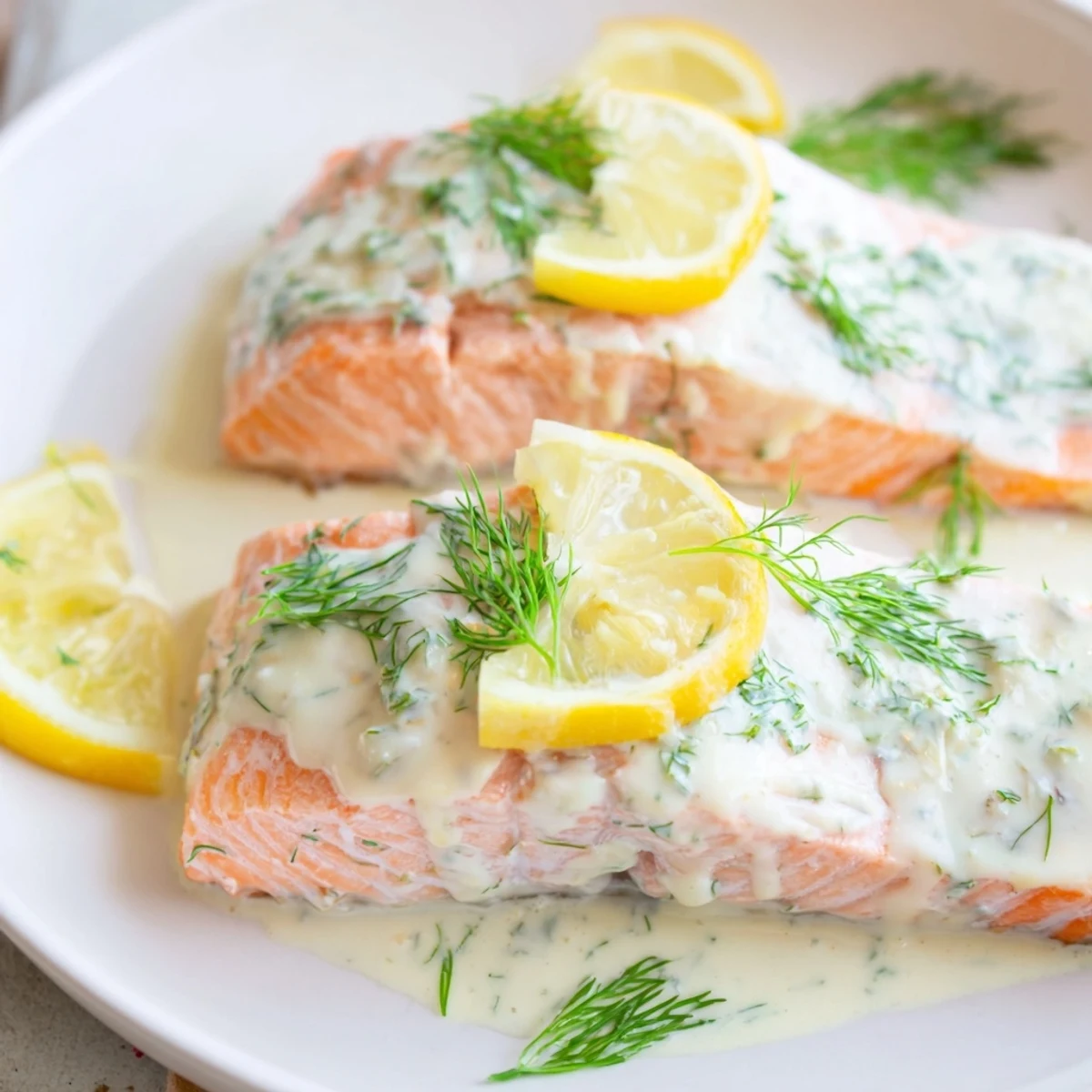
 Enjoy tender, flaky salmon fillets baked to perfection and dressed with a creamy sauce combining fresh dill and zesty lemon. The salmon is brushed with olive oil, seasoned simply with salt and pepper, then baked until it flakes easily. Meanwhile, a smooth sauce is prepared using butter, garlic, and a touch of flour for thickness, enhanced by broth, cream, lemon zest, lemon juice, and fresh dill. This balanced dish offers a bright, flavorful finish, perfect for weeknight dinners or elegant occasions. Garnishing with lemon slices and extra dill adds fresh, aromatic notes to each serving.
The first time I made this salmon was a Tuesday evening when I'd completely forgotten to defrost anything for dinner. The salmon fillets were still partially frozen, and I was convinced it would be a disaster, but sometimes the low effort dinners surprise us the most.
My roommate walked in mid sauce making, asking what smelled so incredible, and ended up staying for dinner. We ate standing up at the counter because neither of us wanted to bother setting the table.
Ingredients
- 4 salmon fillets (170 g/6 oz each): Skin on helps retain moisture during baking, though skinless works too
- 1 tbsp olive oil: Helps the seasoning adhere and keeps the fish from drying out
- 1/2 tsp sea salt and 1/4 tsp black pepper: Simple seasoning that lets the fish shine
- 2 tbsp unsalted butter: The foundation of a velvety sauce
- 2 garlic cloves, minced: Fresh garlic beats preminced every time
- 1 tbsp allpurpose flour: Creates the silky base use glutenfree if needed
- 1 cup (240 ml) lowsodium chicken or vegetable broth: Low sodium lets you control the salt level
- 1/2 cup (120 ml) heavy cream: Halfandhalf works for a lighter version
- Zest of 1 lemon and 2 tbsp fresh lemon juice: Both zest and juice are essential for full flavor
- 2 tbsp fresh dill, chopped: Fresh dill is nonnegotiable here dried won't give the same brightness
- Lemon slices and extra dill: For that final restaurant worthy presentation
Instructions
- Preheat and prepare:
- Heat your oven to 200°C (400°F) and line a baking sheet with parchment paper.
- Season the salmon:
- Pat the fillets completely dry, place them skinside down, brush with olive oil, and season evenly with salt and pepper.
- Bake to perfection:
- Cook for 1215 minutes until the fish flakes easily and is just opaque in the center.
- Start the sauce base:
- Melt butter in a medium saucepan, sauté garlic for 30 seconds until fragrant, then stir in flour for 1 minute to cook off raw taste.
- Add liquid ingredients:
- Whisk in broth gradually, then cream, stirring constantly to prevent lumps.
- Finish with flavor:
- Add lemon zest, juice, dill, salt, and pepper, simmering 34 minutes until slightly thickened.
- Plate and serve:
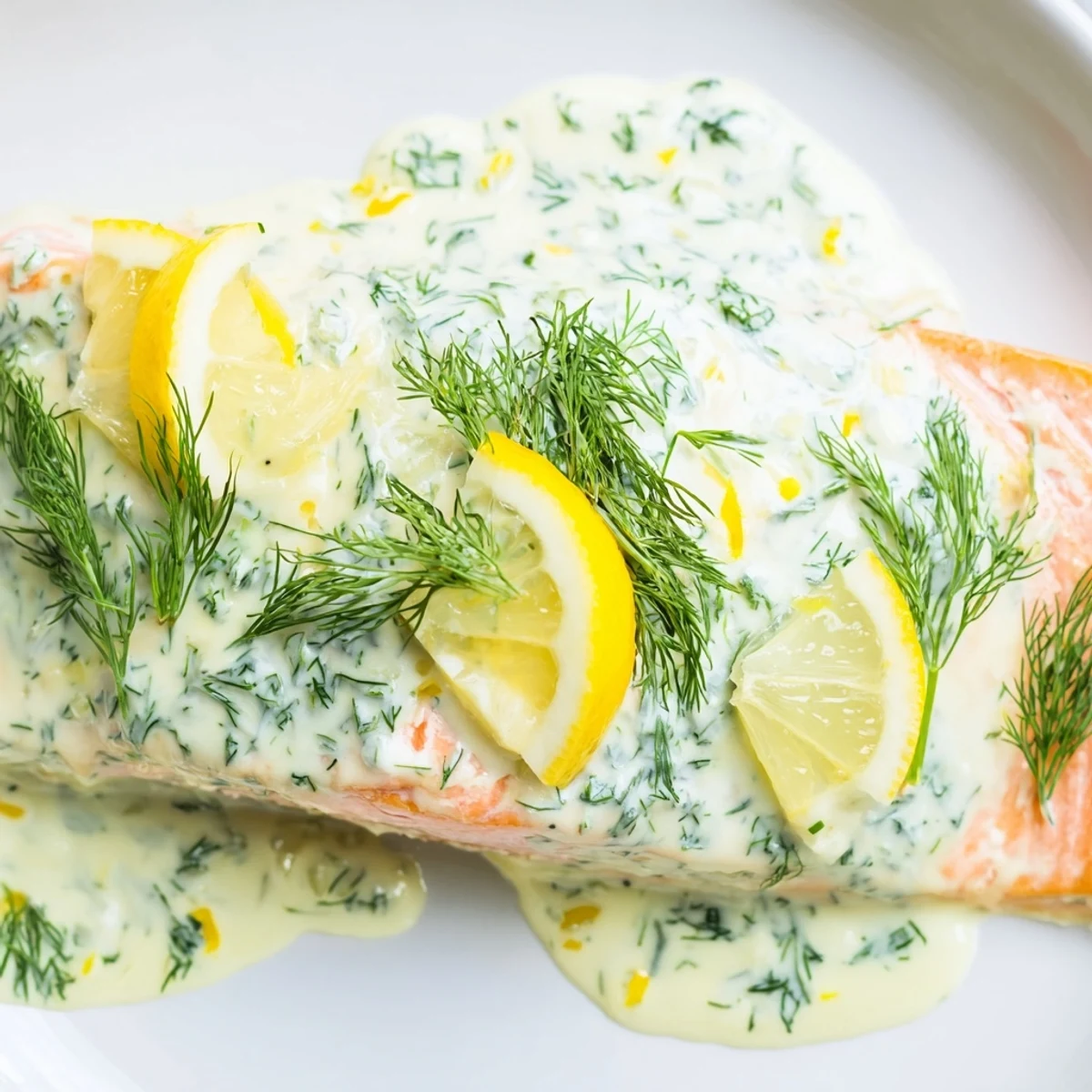
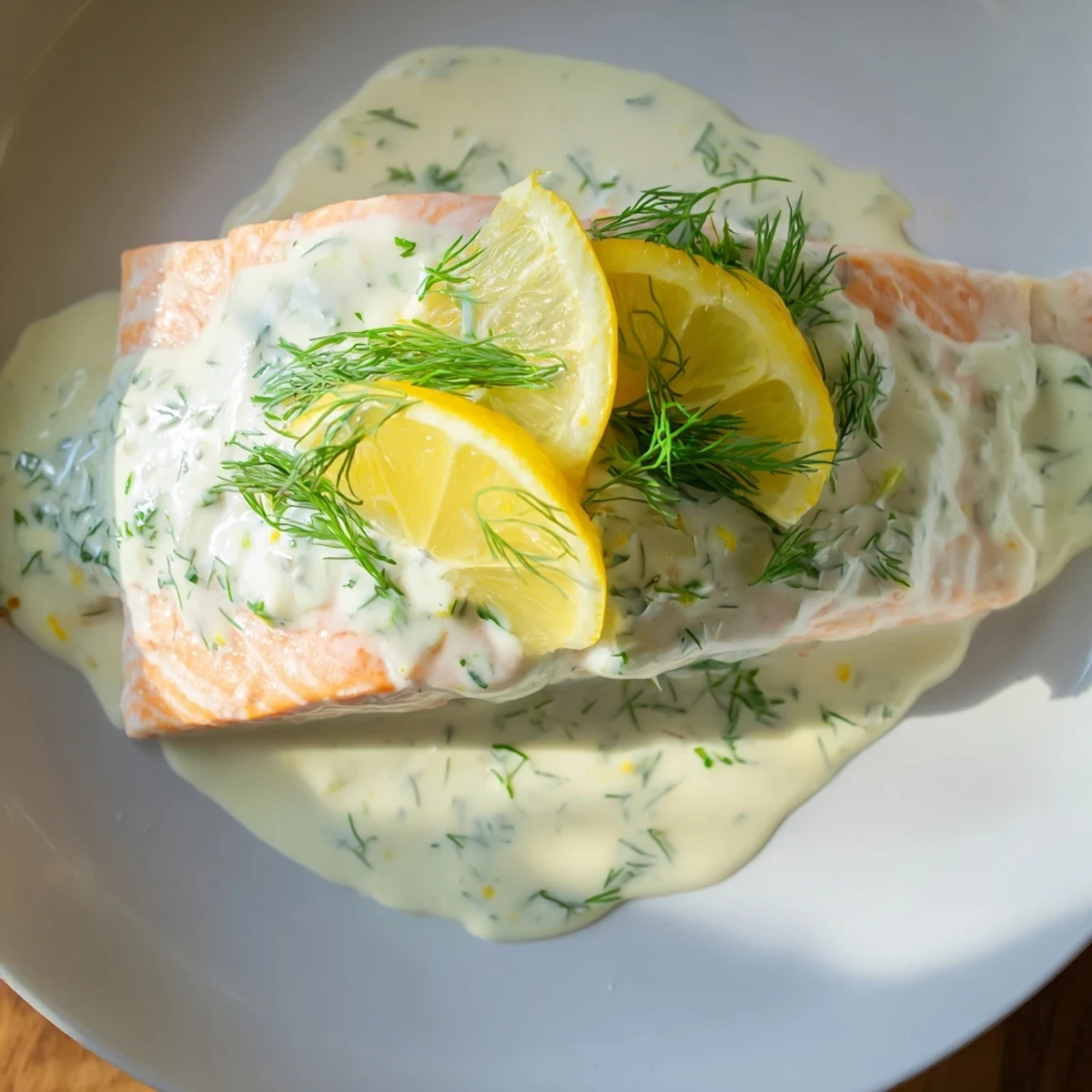
- Spoon sauce generously over salmon and garnish with lemon slices and extra dill.
 Save to Pinterest
 This recipe has become my goto for impromptu dinner parties, mostly because it feels impressive but takes about 20 minutes of actual effort.
Making It Lighter
Replace heavy cream with halfandhalf or whole milk for a sauce that's still creamy but significantly lighter in texture and calories. The tradeoff is a slightly less rich finish, but when salmon is this fresh, that's not necessarily a bad thing.
Side Dish Pairings
Steamed asparagus with a squeeze of lemon cuts through the creamy sauce beautifully. Roasted potatoes absorb every drop, or serve over a bed of lemonkissed arugula for a complete meal in one bowl.
Customization Ideas
Some evenings I add a pinch of crushed red pepper to the sauce for warmth that barely registers until the end. You could also swap dill for fresh tarragon if that's what's growing in your windowsill.
- Add capers to the sauce for a briny kick
- Stir in a spoonful of grainy mustard at the end
- Top with toasted pine nuts for crunch
 Save to Pinterest
 I hope this becomes one of those recipes you can make without even thinking, the one that saves you on busy nights and makes you look like you planned ahead.
Recipe FAQs
- → How do I know when the salmon is perfectly baked?
-
Look for the salmon to flake easily with a fork and become opaque in the center while remaining moist and tender.
- → Can I use skin-on salmon fillets for this dish?
-
Yes, you can bake skin-on fillets; placing the skin-side down helps keep the fish moist during cooking.
- → What can I substitute for heavy cream in the sauce?
-
For a lighter sauce, try using half-and-half or whole milk instead of heavy cream; be mindful the sauce will be less rich.
- → How do I prevent the sauce from clumping when adding broth and cream?
-
Gradually whisk the broth and cream into the roux while stirring constantly to ensure a smooth, lump-free sauce.
- → What side dishes pair well with this salmon preparation?
-
Steamed asparagus, roasted potatoes, or a crisp green salad complement the bright flavors of the salmon and dill lemon sauce.