
 Save to Pinterest
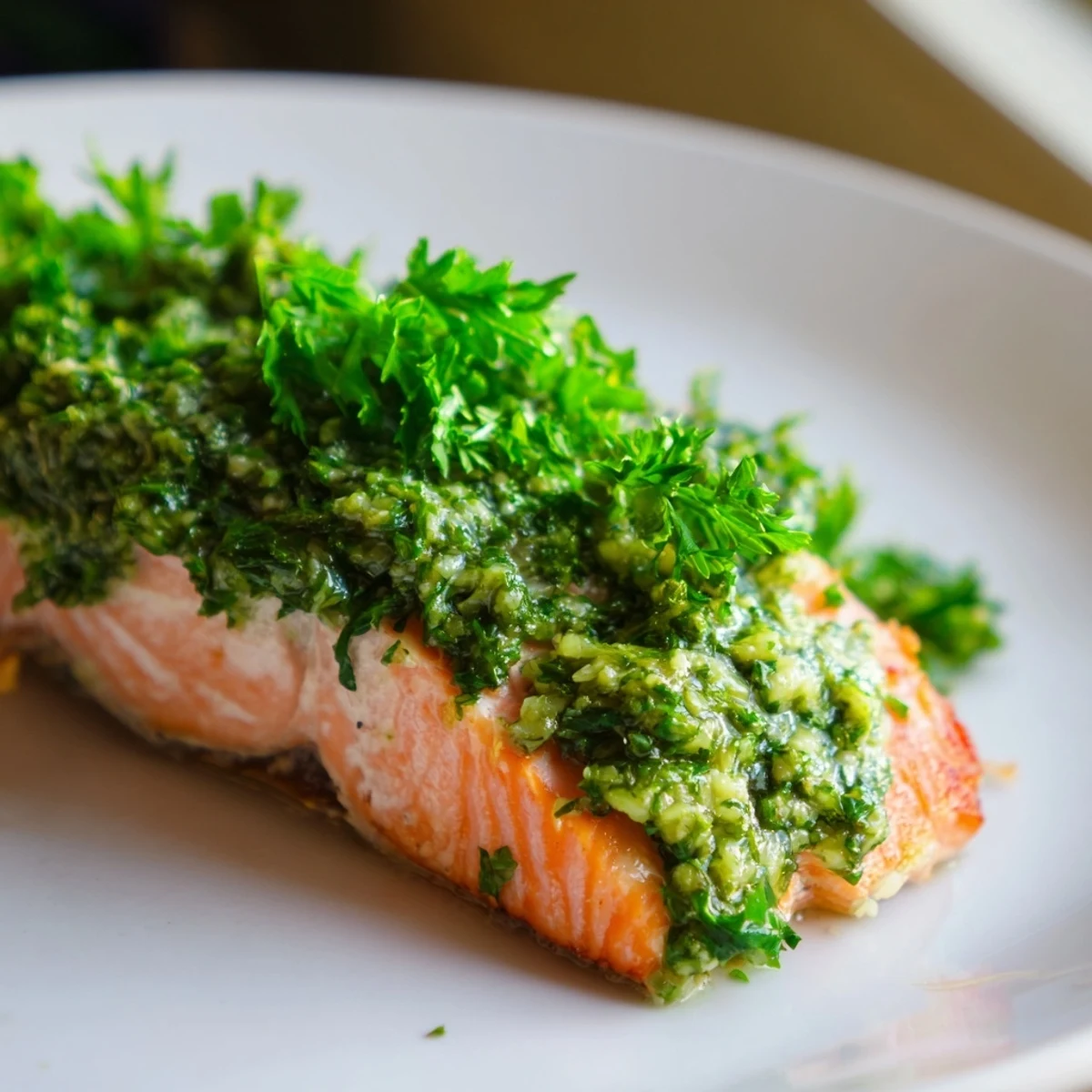
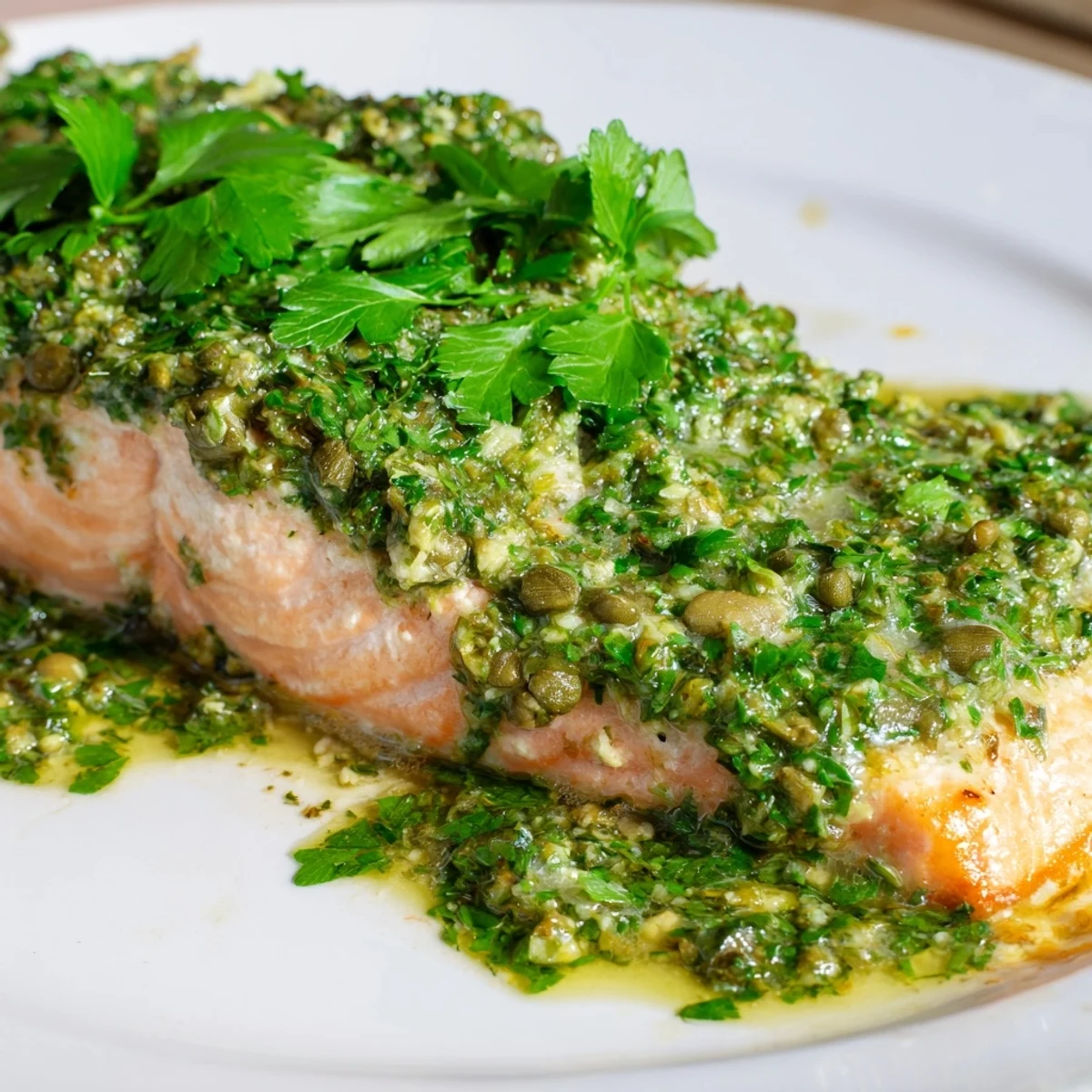
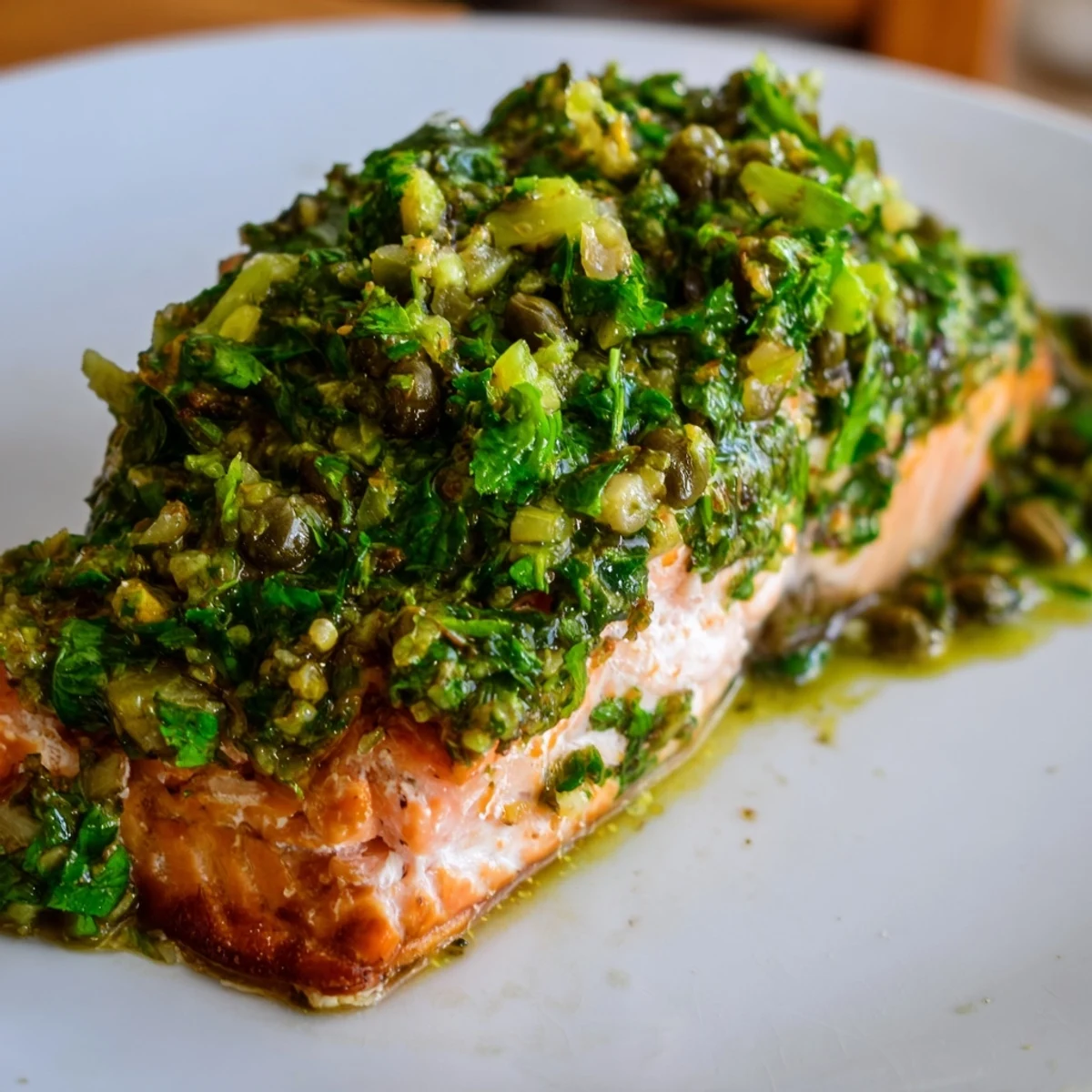
 This Mediterranean-style dish features tender salmon fillets oven-baked to flaky perfection. The vibrant salsa verde combines fresh parsley, basil, capers, and a hint of mustard and garlic, all tied together with extra-virgin olive oil and a splash of vinegar or lemon juice. Serve immediately with lemon wedges for a bright, flavorful experience perfect for a quick, wholesome dinner. Variations can be made by swapping herbs or omitting anchovies for a milder sauce.
I discovered this recipe on a Tuesday evening when my fridge held nothing but salmon and a bunch of herbs that were starting to wilt. The salsa verde came together almost by accident—a handful of parsley, some basil I'd grabbed at the market, a tin of capers I'd been meaning to use. Twenty minutes later, the kitchen smelled incredible, and I realized I'd stumbled onto something that felt both effortless and special.
My sister called during dinner one of those nights when I made this, and she heard the happiness in my voice before I'd said two words. She drove over unannounced twenty minutes later, and we sat at the kitchen counter eating straight from the serving plates, the lemon juice running down our fingers, talking until the food was gone and we'd moved on to wine and old stories.
Ingredients
- Salmon fillets (4, about 170g each): Choose skin-on if you want crispy edges; the flesh cooks more evenly than you'd expect and stays moist inside.
- Olive oil (2 tbsp for salmon): Just enough to coat and help the seasoning stick—you're not frying here, just encouraging browning.
- Sea salt and black pepper: Don't skip the freshly ground pepper; it makes more difference than you think with something this simple.
- Fresh flat-leaf parsley (1 cup): The backbone of salsa verde, it should smell grassy and alive, not tired or bruised.
- Fresh basil leaves (½ cup): Tear it gently if you're not chopping; bruising releases oils that can turn bitter.
- Capers (2 tbsp): Rinse them well after draining to keep the saltiness in check, unless you love briny heat.
- Anchovy fillets (2, optional): If you use them, the umami they add is quiet and deep, not fishy—trust the process.
- Garlic (1 small clove): Minced fine so it doesn't overpower; you're building flavor layers, not making a garlic paste.
- Dijon mustard (1 tbsp): It acts as an emulsifier and adds a subtle tang that brings everything together.
- Red wine vinegar or lemon juice (2 tbsp): Lemon is brighter and fresher; vinegar is richer and slightly mellower—pick based on your mood.
- Extra-virgin olive oil (6 tbsp): This is where quality matters; it's the foundation of the salsa, so use oil you'd actually want to drink.
- Lemon wedges (for serving): A squeeze at the end brightens everything and feels like the perfect punctuation mark.
Instructions
- Heat your oven and prep the pan:
- Set the oven to 200°C and line a baking sheet with parchment paper so nothing sticks and you avoid the cleanup headache later. This small step saves everything.
- Season the salmon and start cooking:
- Lay the fillets on the parchment, drizzle with olive oil, then sprinkle salt and pepper across the surface. The oil helps the seasoning cling and browns the top as it cooks.
- Bake until just done:
- Slide the pan into the oven and set a timer for fourteen to sixteen minutes. You'll know it's ready when a fork flakes through the thickest part with almost no resistance—overcooked salmon is the only real mistake here.
- Build the salsa verde while the salmon cooks:
- Grab a bowl and combine the parsley, basil, capers, anchovies if you're using them, garlic, mustard, and vinegar or lemon juice. Stir them together so everything knows each other.
- Whisk in the olive oil slowly:
- Pour the extra-virgin olive oil in a thin stream while whisking or stirring, watching the mixture transform from chunky herbs into something cohesive and glossy. This slow incorporation is the difference between salsa and sad herb soup.
- Season the salsa to taste:
- Add salt and pepper carefully—remember the capers and anchovies already brought saltiness—and taste as you go. One more squeeze of lemon never hurt anything.
- Plate and serve:
- Transfer the warm salmon to plates, spoon the salsa verde generously over each fillet, and serve immediately with lemon wedges on the side. Warm salmon with cool, bright salsa is the whole point.
 Save to Pinterest
 The first time I made this for guests was the night I realized a recipe isn't really about the recipe—it's about how it makes people feel when they eat it. My neighbor took one bite and closed her eyes like she was somewhere better, and that moment changed how I thought about cooking for people.
Choosing Your Salmon
I've learned that the best salmon is the one you actually want to eat, not the one you think you should. Ask your fishmonger what's fresh that day, and don't be afraid to smell it—good salmon smells like the ocean, not fishy. If you're buying frozen, that's completely fine; it thaws beautifully and often costs less, which means you can make this dinner more often.
Salsa Verde as a Blank Canvas
What I love most about this green sauce is how it changes depending on what you're working with. Some weeks I'm heavy on the parsley because that's what's thriving in my garden; other weeks basil takes over. The proportions aren't gospel—they're a starting point for you to find what tastes like home.
Beyond the Salmon
The salsa verde is genuinely one of those sauces that makes everything better. I've spooned it onto roasted chicken, stirred it into scrambled eggs, and spread it on avocado toast at midnight when nothing else seemed right. Once you make it, you'll find reasons to make it again.
- Leftover salsa keeps for two days in the fridge if you press plastic wrap directly onto the surface to keep it bright green.
- Roasted potatoes or a simple green salad makes the perfect companion, but honestly, the salmon and salsa are enough.
- Serve with lemon wedges because that final squeeze of brightness ties everything together in the most satisfying way.
 Save to Pinterest
 This dinner has become the one I return to again and again—not because it's complicated, but because it's honest. Salmon, herbs, olive oil, and time collapse into something that tastes like care.
Recipe FAQs
- → What is salsa verde?
-
Salsa verde is a fresh, green sauce made with herbs like parsley and basil, combined with capers, garlic, mustard, vinegar or lemon juice, and olive oil to create a zesty topping.
- → Can I omit anchovies from the salsa verde?
-
Yes, anchovies are optional. Omitting them will result in a milder salsa without compromising the vibrant herb flavors.
- → How do I know when the salmon is cooked?
-
The salmon is done when it flakes easily with a fork and has an opaque appearance throughout, usually after 14–16 minutes in a 400°F oven.
- → What can I serve alongside this salmon dish?
-
It pairs well with roasted potatoes, a fresh green salad, or steamed vegetables to complement the bright flavors.
- → How should I store leftover salsa verde?
-
Keep leftover salsa verde in an airtight container in the fridge for up to two days to maintain freshness.