
 Save to Pinterest
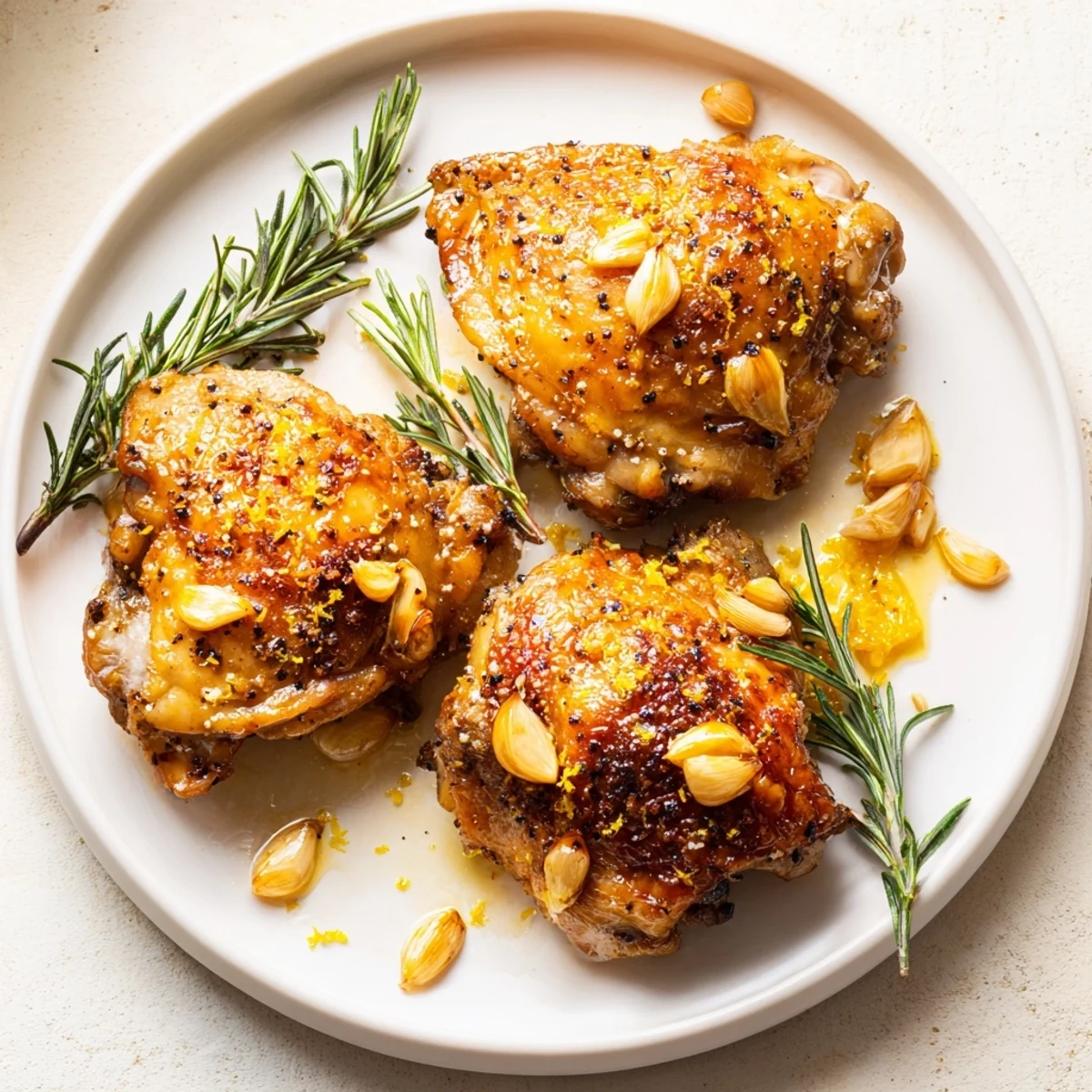
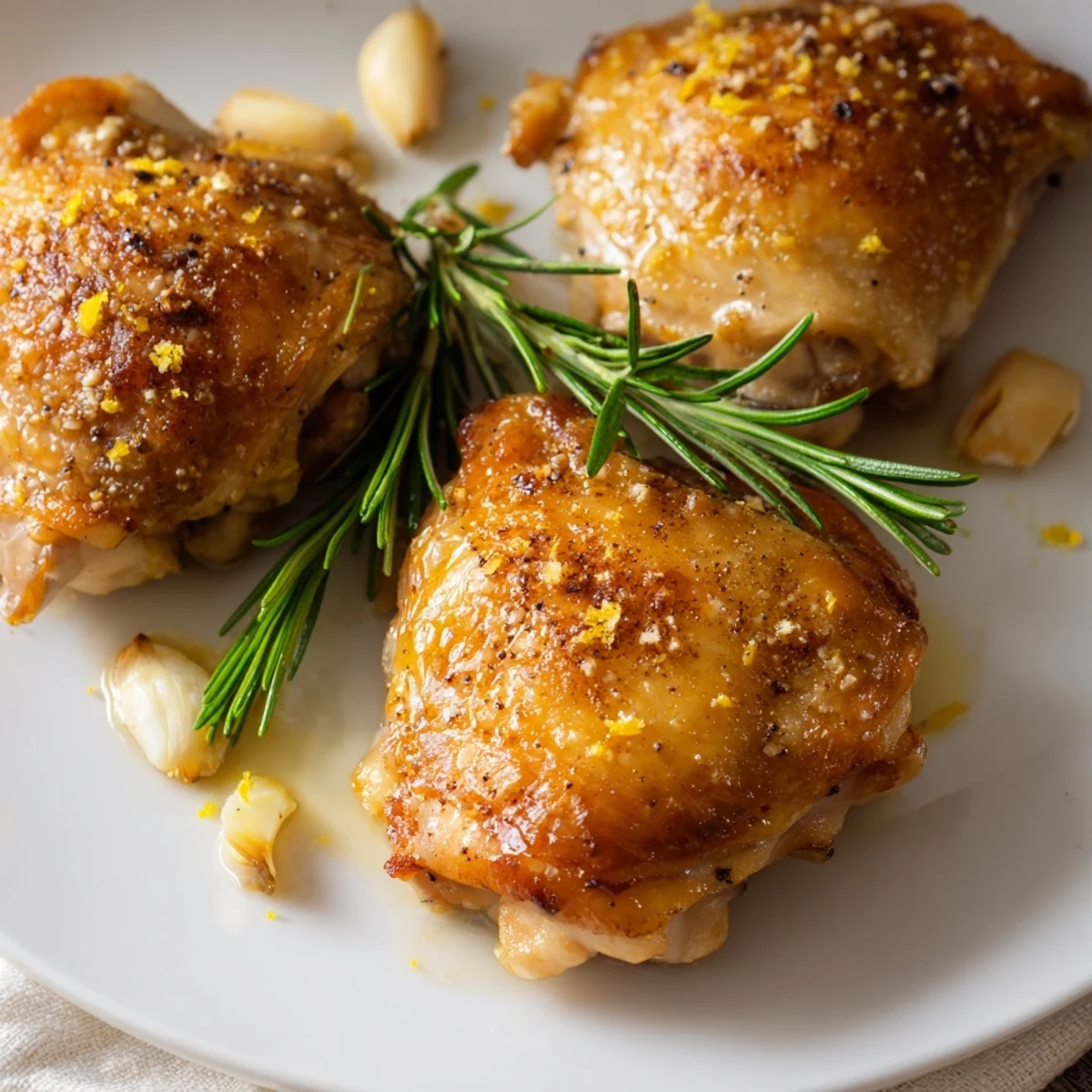
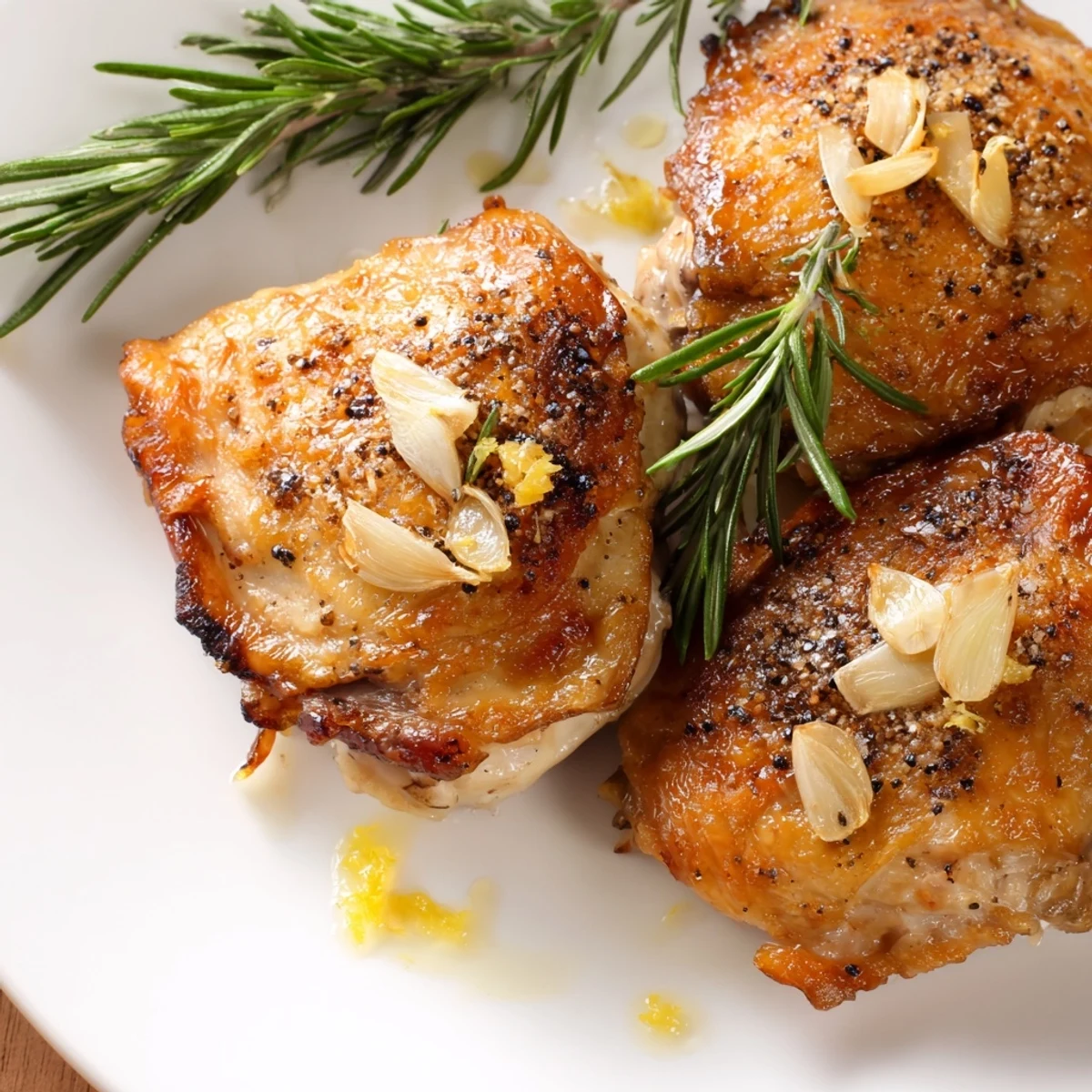
 This dish features chicken thighs cooked to have crisp, golden skin and juicy meat inside. The thighs are seasoned with kosher salt and black pepper, then seared in olive oil until the skin is crackling. Fresh rosemary, smashed garlic, and lemon zest add aromatic depth during roasting in a hot oven. After cooking, resting ensures tender, flavorful results. The balance of herbs and citrus perfectly complements the rich chicken, ideal for an easy yet impressive main course. Optional lemon wedges and garnished rosemary add brightness and visual appeal.
There's a moment in every cook's life when they stop fussing with chicken breasts and discover thighs—and suddenly everything tastes better. Mine came on a quiet Tuesday evening when I decided to stop overthinking dinner and just let the oven do the work. The skin crackled in the pan with this almost rebellious confidence, turning mahogany gold while the meat underneath stayed tender and juicy. That night, I realized this wasn't just dinner; it was the kind of meal that makes people ask for seconds before they've even finished their first bite.
I made this for my sister's surprise dinner party last spring, and watching everyone's faces when they bit into that crackling skin was worth every minute. Someone asked if I'd gotten it from a restaurant, which I'm pretty sure counts as the highest compliment you can get as a home cook. The whole thing came together so naturally—the oven did most of the thinking, and I got to stand around sipping wine instead of panicking over a stove.
Ingredients
- Bone-in, skin-on chicken thighs (4, about 700–800 g): The bone and skin are your secret weapons here—they keep the meat ridiculously moist while the skin crisps up in the pan.
- Kosher salt (1½ tsp): Don't skip seasoning generously; thighs can handle it and actually ask for it.
- Freshly ground black pepper (½ tsp): Fresh pepper makes a noticeable difference, especially when it's this close to the skin.
- Olive oil (2 tbsp): Good quality here means better flavor and better browning—it's worth splurging a little.
- Fresh rosemary sprigs (2–3, plus extra for garnish): The herb that makes your whole kitchen smell like vacation.
- Garlic cloves (3, smashed): Smashing them instead of mincing means they soften into sweet, mellow bites that won't overpower anything.
- Lemon zest (from 1 lemon): This brightens everything without making it taste sour—it's the whisper that makes people wonder what makes this taste so good.
- Lemon wedges (optional, for serving): A squeeze at the end brings the whole dish into sharp focus.
Instructions
- Get your oven ready and your chicken dry:
- Preheat to 425°F while you pat those thighs completely dry with paper towels—moisture is the enemy of crispy skin. Season both sides generously with salt and pepper and let them sit for a minute while you gather your other ingredients.
- Sear the skin until it's golden and defiant:
- Heat olive oil in a large ovenproof skillet over medium-high heat until it shimmers, then lay the chicken thighs skin-side down. Don't touch them for 7–8 minutes; just listen to them sizzle and trust that the skin is getting crispy. You'll know it's ready when it's deep golden and releases easily from the pan.
- Add the aromatics and finish in the oven:
- Scatter the rosemary sprigs, smashed garlic, and lemon zest around the chicken, then transfer the whole skillet to the oven. Roast for 20–25 minutes until the internal temperature hits 165°F—the meat will be cooked through but still tender.
- Rest and serve with confidence:
- Let it rest for 5 minutes—this keeps the juices where they belong, in the chicken, not on your plate. Serve with extra rosemary and lemon wedges if you want to look even more impressive.
 Save to Pinterest
 There's something deeply satisfying about watching someone close their eyes after that first bite, and realizing that simple ingredients in the right order create something that tastes like it took hours. This dish taught me that cooking doesn't have to be complicated to be memorable.
Why This Recipe Changed My Cooking
For years I roasted chicken the same timid way, worried about drying it out, and it showed. Then I learned that thighs are basically forgiving, that the skin is where the flavor lives, and that a hot oven and a little patience do more than any technique. Once I stopped being afraid and started trusting the meat, everything shifted—suddenly I was making things that tasted like they belonged in someone's favorite memory.
Variations That Actually Work
This recipe is flexible in the best way—you can swap thyme for rosemary if that's what's growing in your garden, or add a splash of white wine to the pan before roasting for something richer. Some nights I scatter vegetables around the chicken—potatoes, carrots, whatever needs roasting—and let them catch all those golden, garlicky drippings. The lemon is essential, but you could add a pinch of red pepper flakes if you like heat, or finish with fresh parsley if you want brightness without the woody rosemary note.
What to Serve Alongside
The beauty of this chicken is that it's elegant enough for company but relaxed enough for a quiet night in. Roasted potatoes soak up the pan juices like they were made for each other, and a simple green salad cuts through the richness perfectly. Crusty bread is essential—people will want to wipe their plates clean, and you should let them.
- Roasted root vegetables caramelize in the oven right alongside the chicken if you plan ahead.
- A crisp white wine or light rosé complements the lemon and rosemary without competing for attention.
- Leftover chicken becomes the best kind of lunch salad the next day.
 Save to Pinterest
 This is the kind of recipe that gets better every time you make it, not because the dish changes but because your confidence does. Once you nail it once, you'll make it again and again.
Recipe FAQs
- → How do I achieve crispy skin on chicken thighs?
-
Pat the skin dry and cook skin-side down in hot olive oil without disturbing until golden and crisp before roasting.
- → Can I substitute rosemary with other herbs?
-
Thyme works well as an alternative, providing a slightly different but complementary herbal flavor.
- → What temperature should chicken thighs reach for doneness?
-
The internal temperature should reach 165°F (74°C) for safe and juicy results.
- → Is it necessary to rest the chicken after roasting?
-
Resting for 5 minutes lets juices redistribute, ensuring tender and moist meat.
- → What sides pair well with this chicken dish?
-
Roasted vegetables, mashed potatoes, or a fresh salad complement the rich flavors nicely.