
 Save to Pinterest
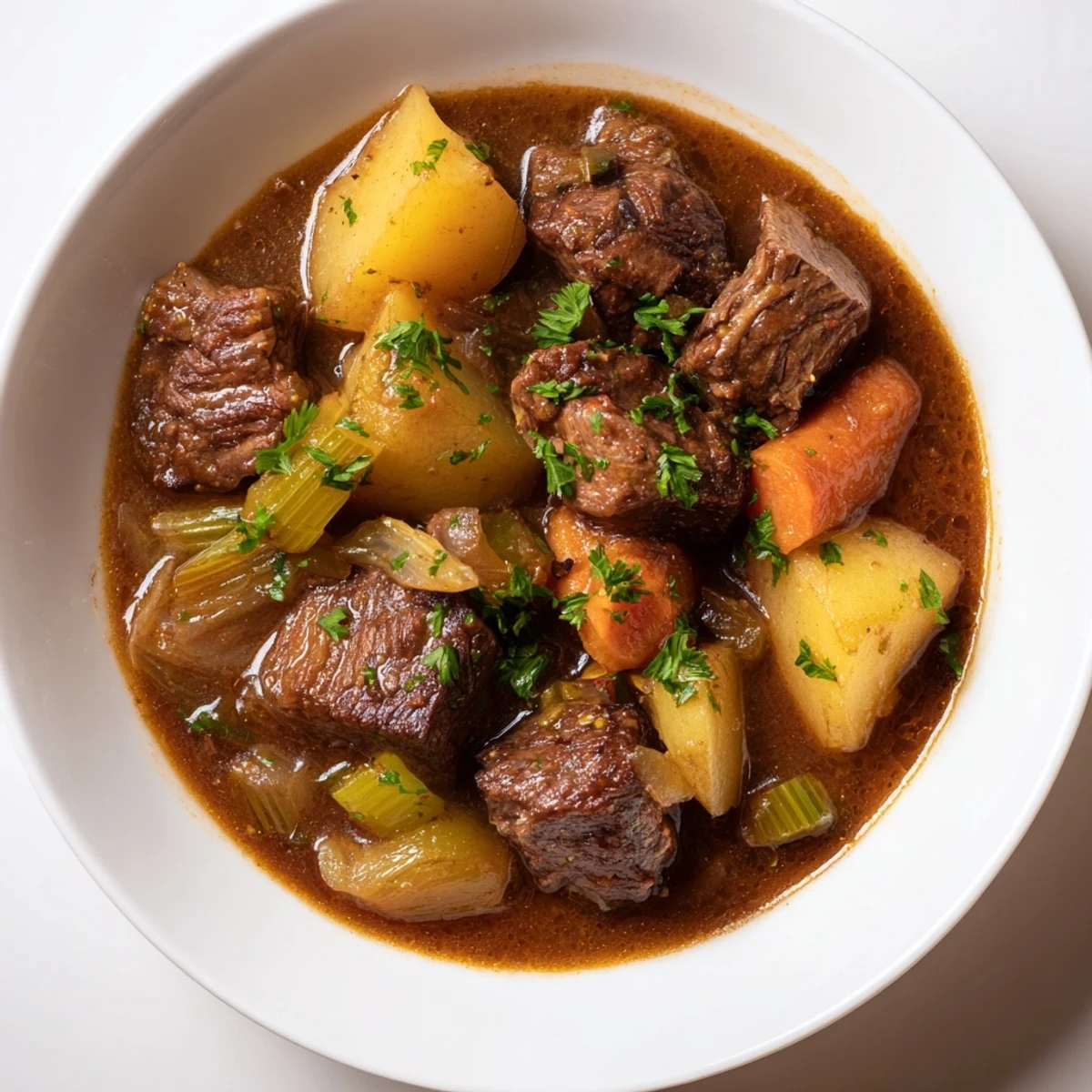
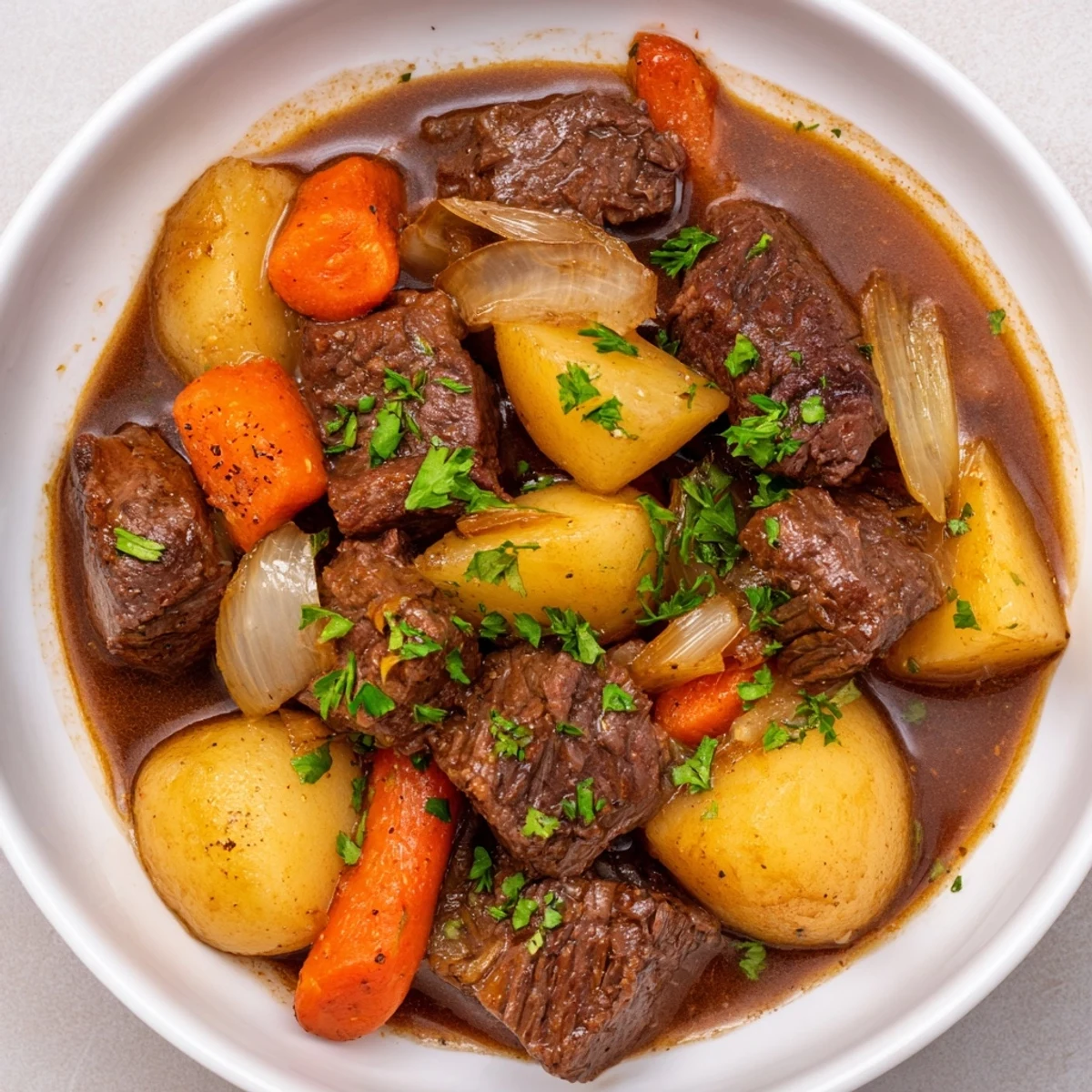
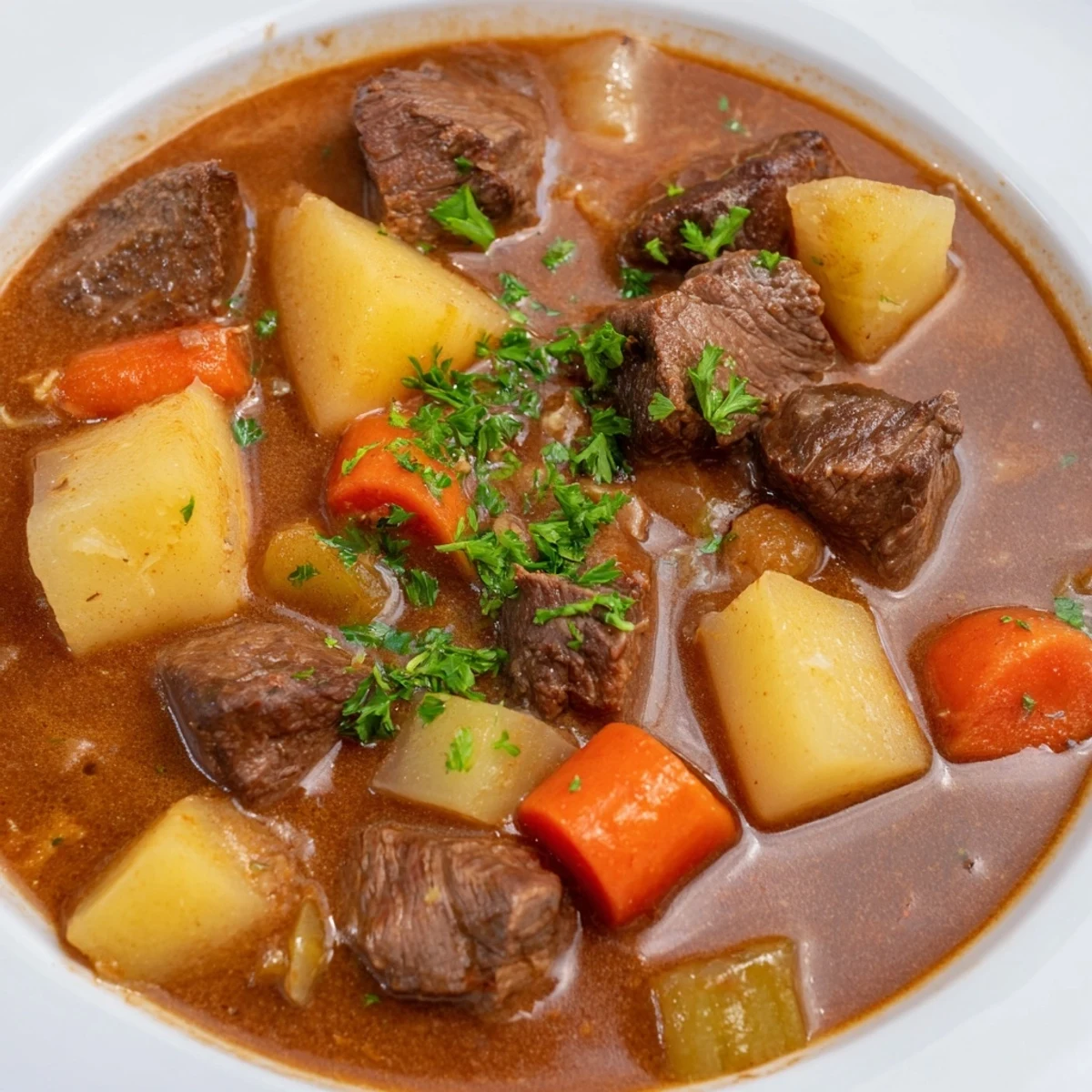
 This comforting dish features tender beef chunks slowly simmered with carrots, potatoes, celery, and onions, all enveloped in a rich, flavorful broth enhanced by tomato paste, thyme, and bay leaves. The slow cooking melds flavors and ensures succulent meat perfect for chilly evenings. A splash of red wine adds depth, and frozen peas add a fresh touch toward the end. Garnished with fresh parsley, it pairs wonderfully with crusty bread.
Preparation involves browning the beef for enhanced flavor, sautéing vegetables, and simmering everything until tender, creating a hearty meal that satisfies and warms.
There's something about the sound of beef hitting hot oil that still pulls me back to my college roommate's kitchen, where she made this stew on a Sunday afternoon when everyone showed up unannounced and hungry. I watched her work through the steps with such ease—the way she let the meat develop that deep brown crust, how the whole apartment filled with this savory warmth that made you want to stay for hours. That day taught me that the best meals aren't the ones that look fancy; they're the ones that make people linger at the table, trading stories while the stew cools just enough to eat.
I made this for my partner on our first winter together, when we were still figuring out how to be comfortable in each other's space. He came home to the smell of it simmering, and I remember how his whole face changed—not because it was fancy, but because someone had spent two hours thinking about him. We sat on the kitchen floor eating it straight from the pot because we couldn't wait for bowls, and I realized then that this stew had done something important.
Ingredients
- Beef chuck, 2 lb cubed: The fattier cuts are your secret—they dissolve into the broth and make everything silky, so don't reach for lean meat here.
- Carrots and potatoes: Cut them larger than you think necessary; they soften but hold their shape, which keeps the stew from turning mushy.
- Yellow onion, garlic, celery: This is your flavor base, and sautéing them first before everything else goes in makes a real difference you'll taste.
- Beef broth, 4 cups: The quality of this matters more than you'd expect—a good broth gives you depth without any extra work.
- Red wine (optional): If you use it, the alcohol cooks off and leaves behind something that makes the broth taste like it's been simmering all day.
- Flour, tomato paste, thyme, bay leaves: The flour thickens everything gently, the tomato paste adds sweetness that balances the savory notes, and the herbs tie it all together without being loud about it.
- Fresh parsley for garnish: A small handful scattered on top right before serving brings brightness and makes it feel finished.
Instructions
- Dry and season the beef:
- Pat each cube with paper towels until it's really dry—this is what lets the meat brown properly instead of steaming. Season generously with salt and pepper right before it hits the pan.
- Brown the meat in batches:
- Don't crowd the pot; give each piece space to develop that deep, caramelized crust. It takes about 4–5 minutes per batch, and yes, it's worth doing it slowly.
- Build your flavor base:
- Once the beef is out, add onions, carrots, and celery to the same pot with all those browned bits stuck to the bottom. That's flavor gold. Sauté until the onions turn translucent, about 5 minutes, then add the garlic and let it bloom for just a minute.
- Make a roux:
- Sprinkle flour over the vegetables and stir so everything gets coated. This is going to thicken your stew naturally as it simmers.
- Deglaze with wine:
- Pour in the red wine and scrape the bottom of the pot with a wooden spoon, pulling up all those caramelized bits. If you're not using wine, skip this step and move straight to the broth.
- Build the stew:
- Return the beef to the pot, add potatoes, bay leaves, thyme, and the beef broth. Bring it to a boil over medium-high heat, then reduce to low, cover, and let it simmer gently for 1½ to 2 hours until the beef is fork-tender.
- Finish with vegetables:
- Remove the bay leaves, stir in the frozen peas, and let it cook uncovered for another 5–10 minutes. Taste it, adjust the salt and pepper, and top with fresh parsley before serving.
 Save to Pinterest
 The first time someone asked for my recipe, I realized this stew had become more than just dinner—it was what I made when I wanted to show up for someone without making a fuss. It's humble and honest, the kind of food that lets you be fully yourself while eating it.
Why Searing Really Matters
I learned this lesson the hard way when I tried to save time by skipping the searing step entirely. The stew tasted flat and one-dimensional, like something was fundamentally missing. What's happening when you sear the meat is the Maillard reaction—a chemistry thing that creates hundreds of new flavors that just can't happen if you dump cold beef straight into liquid. Now I sear everything, and the difference is impossible to ignore.
The Right Pot Changes Everything
A Dutch oven or heavy-bottomed pot isn't just nice to have; it's the reason this stew cooks evenly without scorching at the bottom. The heavy bottom distributes heat slowly and gently, which is exactly what you need for something that's going to simmer for two hours. I've made this in thinner pots before, and I was constantly stirring and worrying—not worth it.
Make It Your Own
This is a forgiving recipe that welcomes changes. I've added turnips when carrots weren't calling to me, swapped some of the broth for extra red wine, and even thrown in pearl onions when I wanted something fancier. The core method stays the same—sear, sauté, simmer—and the results are always solid. Think of this as a template rather than a command.
- Root vegetables like parsnips or turnips work beautifully in place of some of the potatoes.
- A splash of balsamic vinegar at the end adds unexpected depth without tasting like vinegar.
- Mushrooms sautéed with the onions bring an earthy richness that's hard to describe but easy to taste.
 Save to Pinterest
 This stew is proof that the simplest dishes often taste the best. Come back to it whenever you need something warm, honest, and deeply satisfying.
Recipe FAQs
- → What cut of beef works best for this stew?
-
Beef chuck is ideal due to its marbling, which breaks down during slow cooking, resulting in tender and flavorful pieces.
- → Can I substitute the red wine used in the stew?
-
Yes, red wine can be replaced with additional beef broth for a milder taste without altering the overall richness.
- → How do I thicken the stew broth?
-
Sprinkling flour over the sautéed vegetables before adding liquids helps create a thicker, richer broth.
- → Is there a way to add more vegetables to this dish?
-
Root vegetables like parsnips or turnips can replace some potatoes, or additional seasonal vegetables can be incorporated to enhance texture and flavor.
- → What is the best method to achieve tender beef in the stew?
-
Slow simmering the beef at low heat for 1½ to 2 hours helps break down connective tissue, resulting in a tender, melt-in-your-mouth texture.