
 Save to Pinterest
 This clever stovetop adaptation transforms traditional lasagne into a quick weeknight meal. A rich meat sauce with tomatoes, oregano and basil forms the base, while oven-ready pasta sheets nestle directly into the simmering sauce. Dollops of creamy ricotta blended with Parmesan create those signature white layers, topped with melted mozzarella. Everything cooks together in a single frypan, letting the pasta absorb all the savory flavors while the cheese creates a golden, bubbly topping. Perfect for when you want lasagne comfort without the oven time.
Rainy Tuesday nights were made for dishes like this. I stumbled onto stovetop lasagne when my oven died mid-prep, and honestly—it changed everything about how I approach comfort food. The pasta cooks right in the sauce, getting all those stubborn bits of flavor that usually stick to the pan.
My sister called halfway through making this once, starving after a terrible day. I told her to come over, and she watched me break those lasagne sheets into the bubbling sauce like it was some kind of kitchen magic. We ate straight from the pan.
Ingredients
- 1 tablespoon olive oil: The foundation of everything good
- 1 medium onion, finely chopped: Takes on a sweet sweetness as it softens
- 2 garlic cloves, minced: Add this right before the meat so it does not burn
- 400 g (14 oz) ground beef or pork: Pork adds extra richness but beef works perfectly
- 400 g (14 oz) canned crushed tomatoes: Choose a brand you actually like eating plain
- 2 tablespoons tomato paste: Concentrated umami that deepens everything
- 1 teaspoon dried oregano: Dried herbs work better here than fresh for even distribution
- 1 teaspoon dried basil: Complements the oregano without competing
- 1 teaspoon salt: Adjust based on your tomatoes
- ½ teaspoon black pepper: Freshly cracked makes a real difference
- ½ cup water: Helps the pasta cook without thinning the sauce too much
- 6 oven-ready lasagne sheets: Break them into irregular pieces for more surface area
- 250 g (1 cup) ricotta cheese: Room temperature spreads easier
- ½ cup grated Parmesan cheese: Adds that salty bite we all crave
- 1 cup shredded mozzarella cheese: Divided use gives you melty layers and a golden top
Instructions
- Build the flavor foundation:
- Heat olive oil in a large non-stick frypan over medium heat. Add onion and cook for 2 minutes until softened and translucent. Add garlic and cook for just 30 seconds until fragrant.
- Brown the meat:
- Add ground meat and cook, breaking it up with your spoon, until browned all through, about 5 minutes. Drain excess fat if there is a lot pooling.
- Create the sauce:
- Stir in crushed tomatoes, tomato paste, oregano, basil, salt, pepper, and water. Bring everything to a gentle simmer. The sauce should look thick and already smell incredible.
- Nestle in the pasta:
- Break lasagne sheets into large pieces and press them into the sauce until mostly submerged. Cover and simmer on low for 10 minutes, stirring occasionally so nothing sticks. The pasta will start absorbing all that flavor.
- Mix the cheese layer:
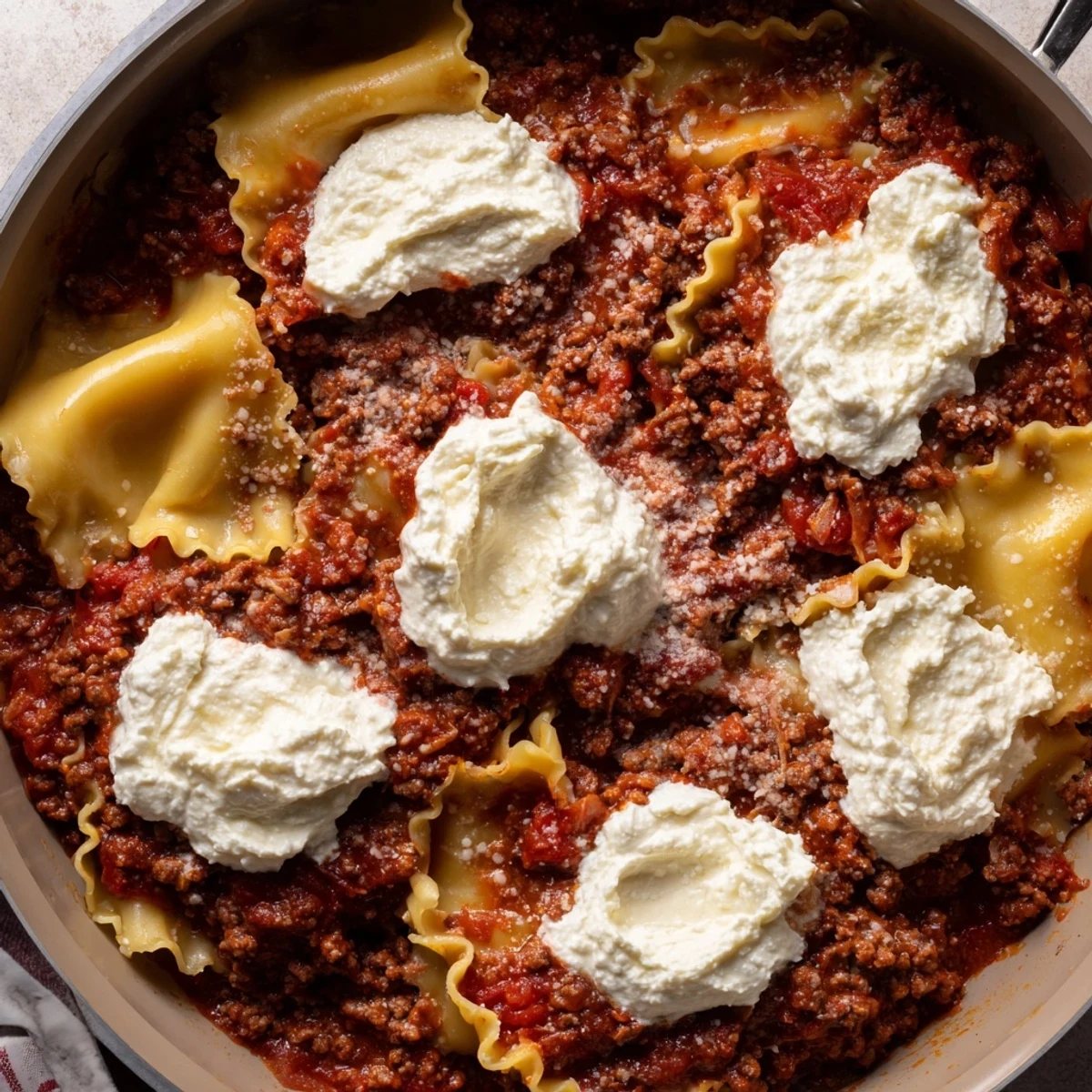
- While that simmers, stir together ricotta and Parmesan in a small bowl until combined. This gets spooned over later like little clouds of creaminess.
- First cheese round:
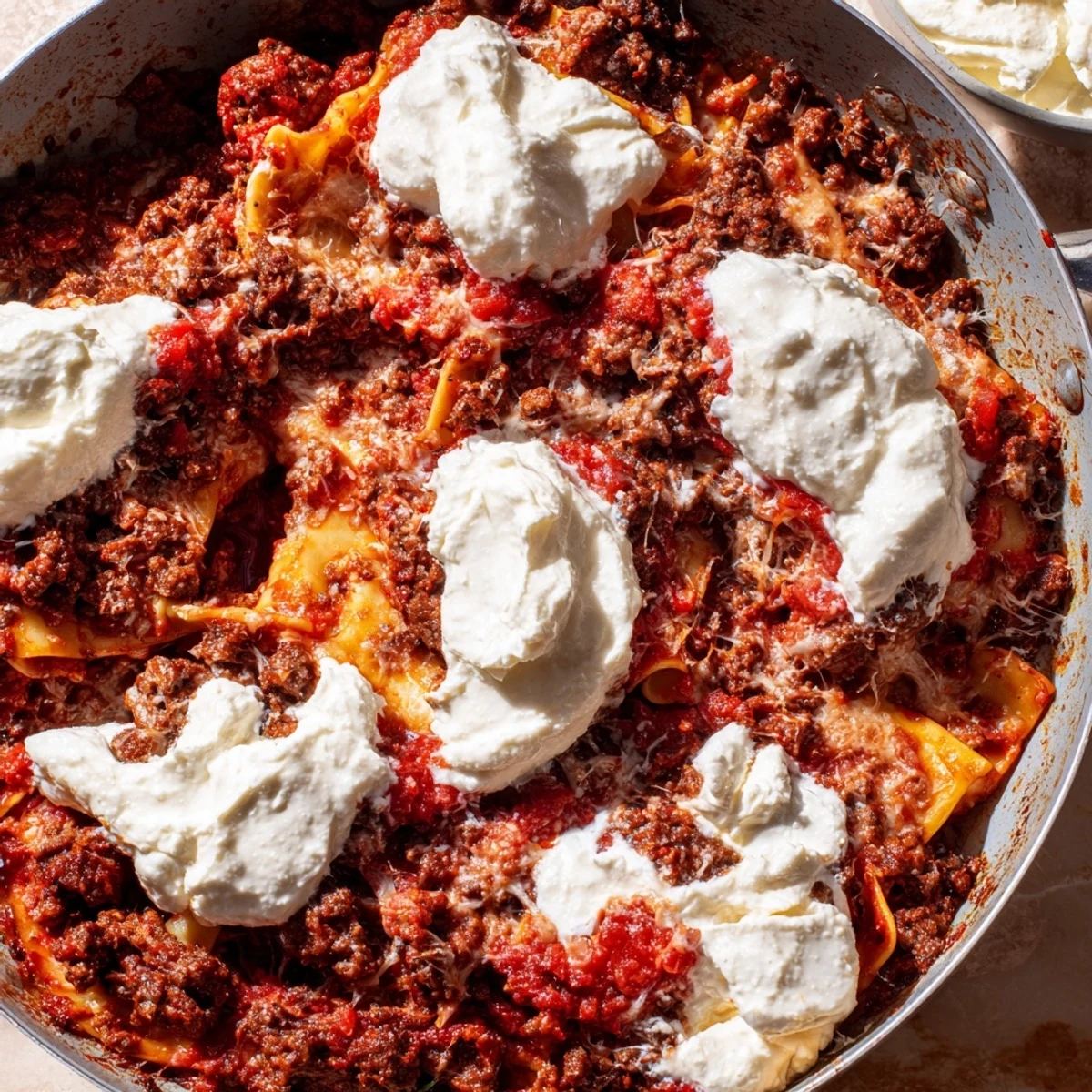
- After 10 minutes, dollop spoonfuls of the ricotta mixture over the pasta. Sprinkle with half the mozzarella. Cover and cook another 10 minutes until pasta is tender when you bite a piece.
- The golden finish:
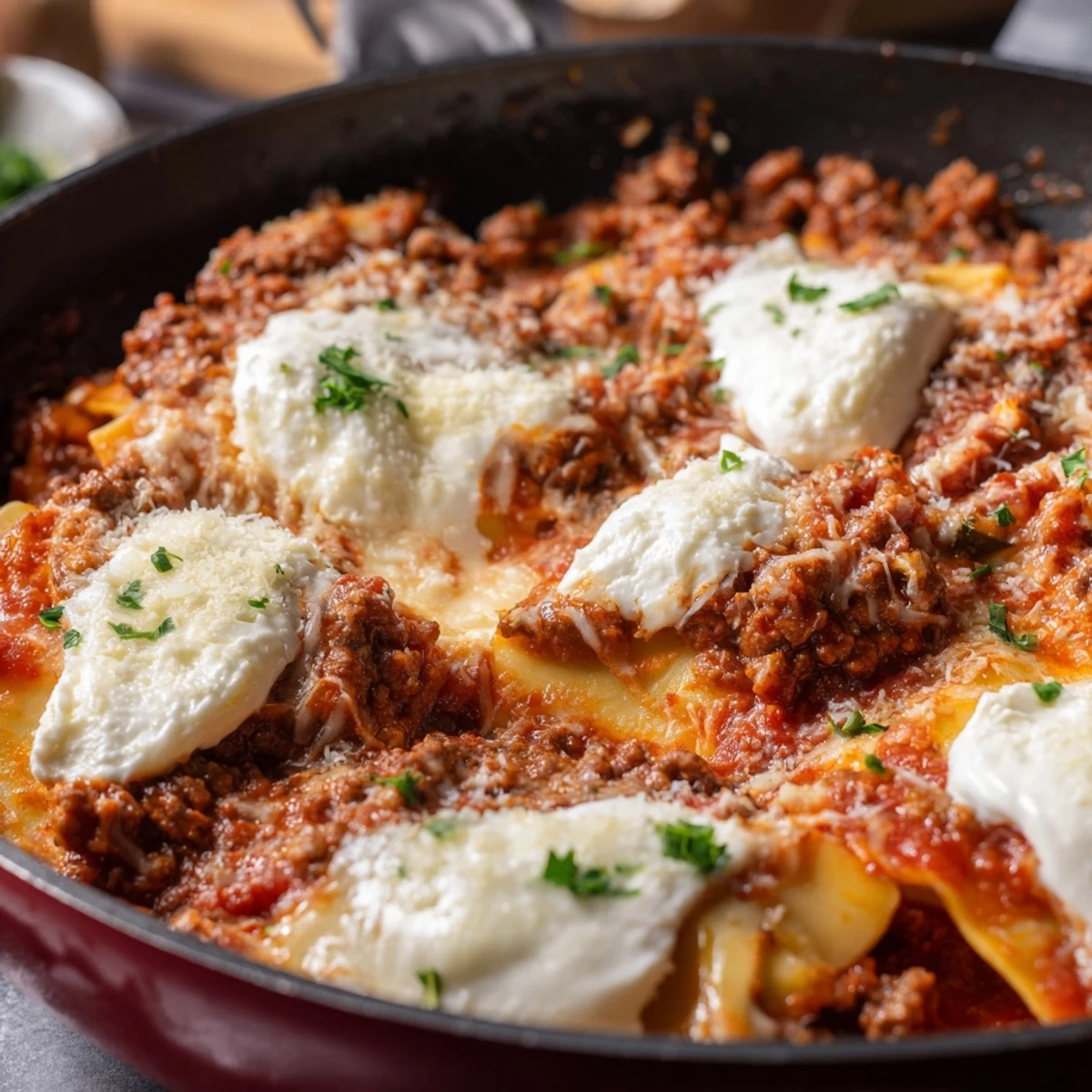
- Remove the lid and scatter the remaining mozzarella over the top. Cover for 2 more minutes until melted and bubbly. Let it rest for 5 minutes before serving—this helps the layers set slightly.
 Save to Pinterest
 My neighbor knocked on the door while this was simmering once. She stayed for dinner and now requests it every time she comes over. Something about eating lasagne from a single pan feels like a secret we share.
Making It Yours
The beauty here is how flexible the method is. Once you understand the technique, you can swap proteins, add vegetables, or change the cheese blend. It works.
Getting the Texture Right
You want the pasta tender but not falling apart. That 10 minute simmer then rest period is crucial. If you cut into it too soon, everything slides apart. Wait those 5 minutes.
Serving Ideas
This needs nothing more than a simple green salad dressed with olive oil and vinegar. Maybe some crusty bread for mopping up that sauce. Keep it easy.
- A glass of red wine turns Tuesday into occasion
- Crispy roasted broccoli on the side cuts through the richness
- Leftovers reheat beautifully for lunch the next day
 Save to Pinterest
 Some nights call for recipes that hug you back. This is one of them.
Recipe FAQs
- → Can I use regular lasagne sheets instead of no-boil?
-
Yes, but you'll need to par-boil them first or extend the cooking time and add extra liquid. No-boil sheets work best as they soften perfectly in the sauce.
- → What other meats can I use?
-
Ground turkey, chicken, or Italian sausage all work well. For a vegetarian version, try sautéed mushrooms, zucchini, or lentils with extra vegetables.
- → Can I make this ahead of time?
-
The sauce can be prepared a day in advance and refrigerated. When ready to serve, reheat the sauce and continue with the pasta and cheese steps.
- → Do I really need a lid?
-
A lid is essential for trapping steam and helping the pasta cook through evenly. If you don't have a lid, a baking sheet or large plate can work as a substitute.
- → Can I add vegetables to the sauce?
-
Absolutely. Diced bell peppers, spinach, grated carrots, or chopped mushrooms can be added with the onion for extra nutrition and flavor.
- → How do I know when the pasta is done?
-
The pasta should be tender when pierced with a fork and easily pull apart. If it's still crunchy, cover and cook for another few minutes adding a splash of water if needed.