
 Save to Pinterest
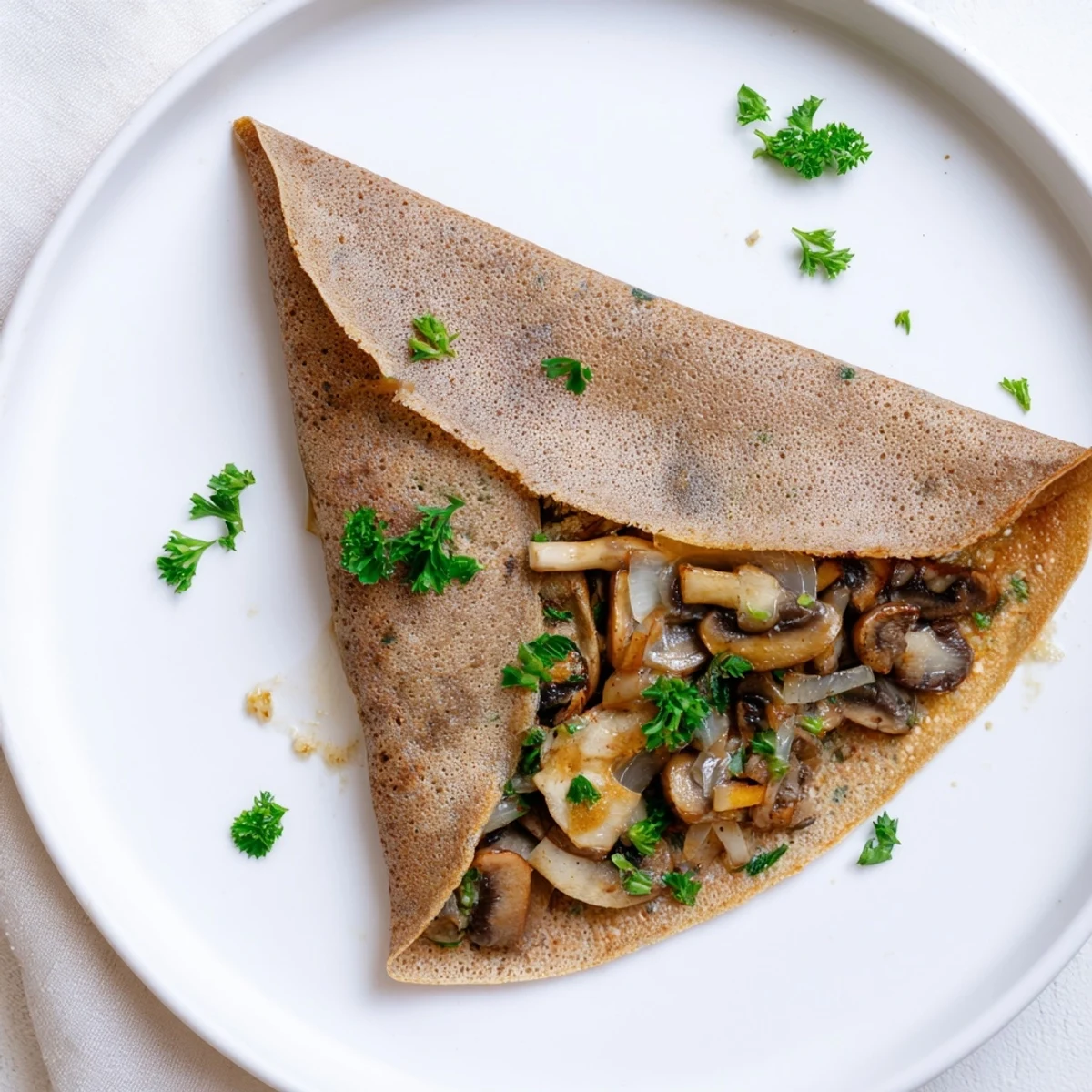
 These delicate buckwheat crêpes offer a thin, tender base infused with authentic Breton flavor. Filled with sautéed cremini mushrooms, garlic, and melted Gruyère cheese, they make an elegant yet approachable dish for brunch, lunch, or dinner. The batter combines buckwheat and all-purpose flour with milk and eggs for a smooth, pourable consistency. Cooked carefully in a nonstick pan, the crêpes are folded around the warm filling and garnished with fresh parsley. Variations include adding smoked salmon or ham, or swapping cheeses to suit taste preferences.
The first time I made crêpes in my tiny Parisian apartment, I burned three in a row before understanding the rhythm—heat high enough to sear the edges, wrist loose enough to swirl the batter without thinking. Years later, I realized those delicate buckwheat crêpes weren't just breakfast; they were my answer to "what do we eat tonight?" when the fridge was almost empty but had a few mushrooms and cheese. Now whenever I smell that nutty buckwheat hitting hot butter, I'm transported back to that kitchen where happy accidents taught me more than any recipe could.
I'll never forget the evening my neighbor knocked on my door because the smell of caramelized mushrooms and melted Gruyère was making their apartment unbearable. We ended up sharing a crêpe and a bottle of wine on the fire escape, talking until the light went soft. That's when I understood these aren't fancy food—they're the kind of thing that brings people together without pretense.
Ingredients
- Buckwheat flour: The secret weapon for authentic flavor and a tender crêpe, though it can seem intimidating if you've never used it before.
- All-purpose flour: Acts as a gentle binder and keeps the crêpes from being too delicate to handle.
- Milk: Whole milk creates a richer batter, but if you're using plant-based, oat milk is the closest match.
- Eggs: They bind everything and help the crêpes brown beautifully on both sides.
- Unsalted butter: Melted into the batter, it prevents sticking and adds a subtle richness that makes people ask what your secret is.
- Fine sea salt: A pinch here prevents the batter from tasting flat.
- Water: Keep this nearby because every flour absorbs liquid differently—sometimes you need it, sometimes you don't.
- Olive oil: For sautéing the mushrooms until they release their moisture and turn golden.
- Onion: When cooked slowly, it becomes almost sweet and forms the flavor base for the filling.
- Garlic: Just one clove, because crêpes are delicate and garlic can easily take over.
- Cremini mushrooms: They have more flavor than button mushrooms and hold their shape better when cooked.
- Gruyère cheese: Nutty and complex, it melts into the warm crêpe without becoming stringy or greasy.
- Fresh parsley: Adds brightness and a reminder that this is still a vegetable dish at heart.
Instructions
- Build your batter base:
- Whisk the dry ingredients together first—this keeps them from forming lumps when the wet ingredients hit. Add eggs and milk slowly, whisking until you have a smooth, thin batter that pours easily but isn't watery. Stir in the melted butter last, then let everything rest covered for 15 minutes so the flour fully hydrates.
- Cook the mushroom filling:
- Heat olive oil over medium heat and cook the onion until it's soft and translucent, about 3 minutes. Add garlic and cook just until fragrant, then add mushrooms and cook until they release their liquid and it evaporates, about 5–7 minutes—you'll know they're done when they look slightly caramelized.
- Make the crêpes:
- Get your nonstick pan very hot over medium-high heat and give it a light butter or oil coating. Pour about 1/4 cup of batter into the center and immediately tilt and swirl the pan so the batter spreads into a thin, even layer. Cook for about 1–2 minutes until the edges start to lift and look set, then flip gently and cook the other side for just 1 minute more—it should be pale with a few light brown spots.
- Build and serve:
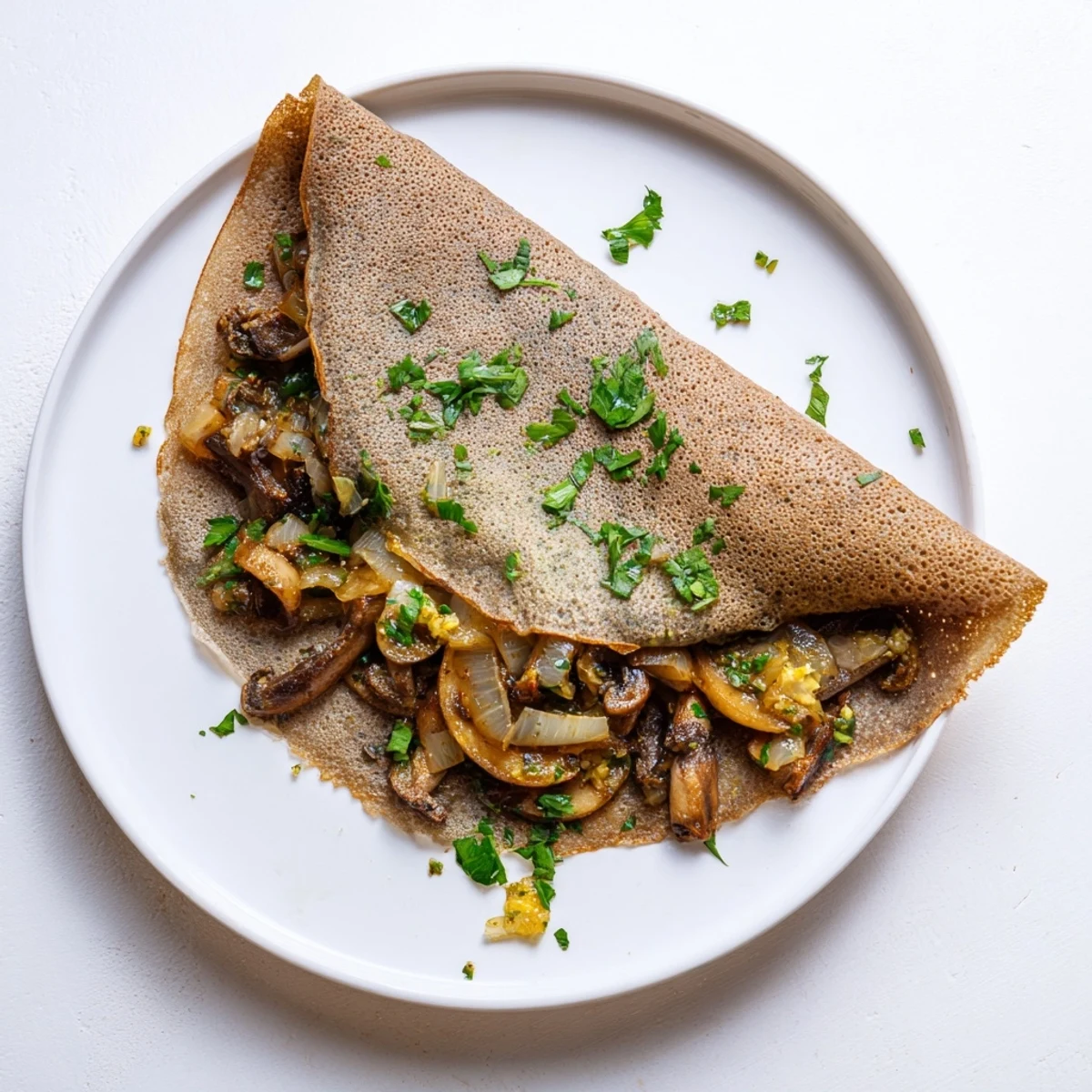
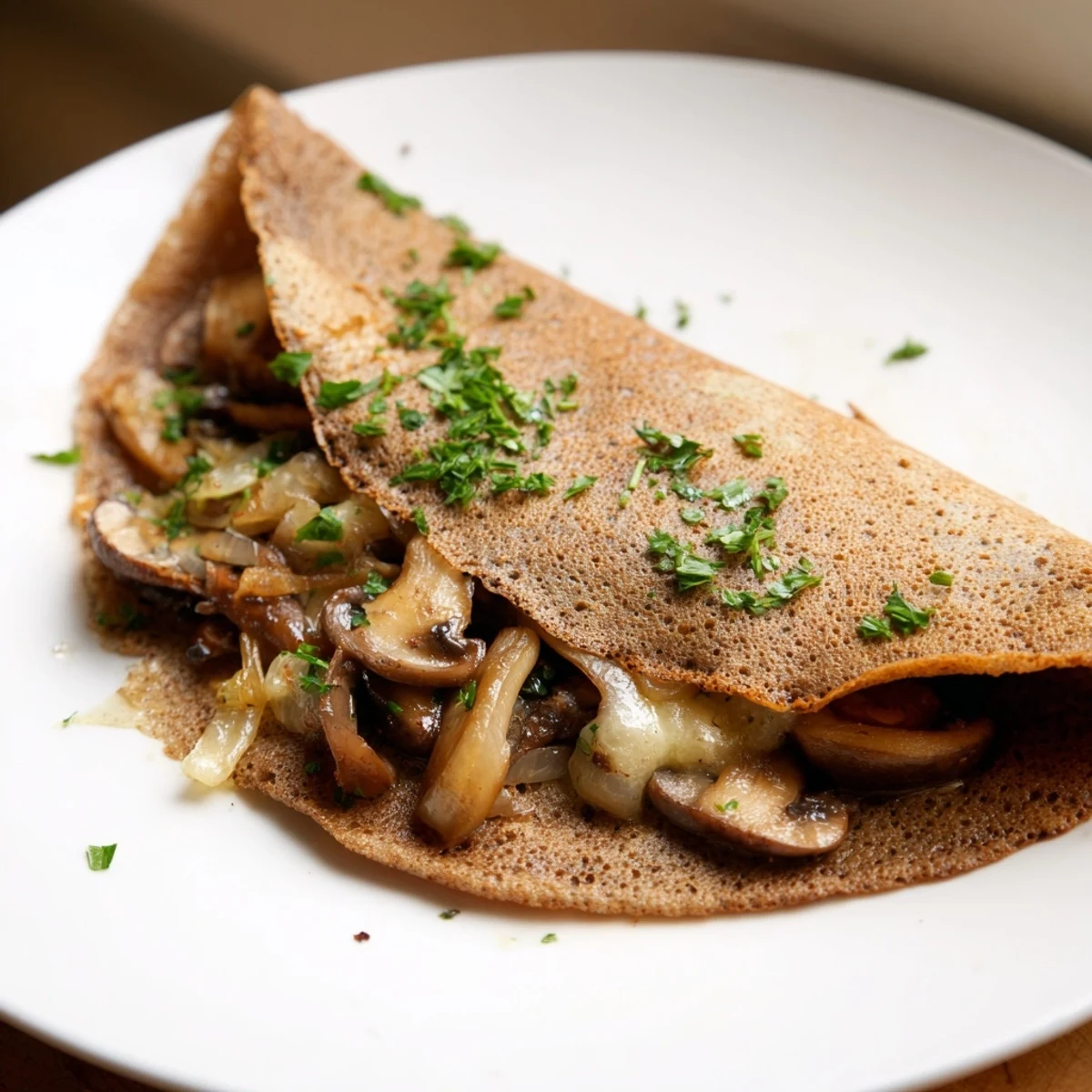
- Lay a finished crêpe on a plate, spoon some mushroom filling and a small handful of grated Gruyère onto one half, then fold the crêpe in half and then into a triangle, or roll it up loosely. Serve warm with extra parsley scattered on top.
 Save to Pinterest
 There's a moment, right after you flip a perfect crêpe and see it land back in the pan with barely a sound, when you realize you've done it—you're not following a recipe anymore, you're cooking. That moment, repeated a dozen times across a warm skillet, is when these crêpes stop being dinner and become something you'll make again and again.
Making Crêpes Feel Effortless
The truth about crêpes is that they're forgiving once you understand the basic formula. Your first one might be lopsided or thicker than you'd like, and that's not a failure—that's your brain learning the motion. By the third or fourth crêpe, your hands know exactly how much to swirl, how fast to move, and when to flip. The motion becomes almost meditative, and suddenly you're making restaurant-quality crêpes without thinking about it.
Why Buckwheat Matters Here
Buckwheat isn't trendy or complicated—it's just been the traditional choice for French galettes and crêpes for centuries because it tastes wonderful and behaves perfectly in a thin batter. The flavor is subtly earthy and slightly nutty, which pairs beautifully with mushrooms and cheese without competing with them. If you can't find it or buckwheat makes you nervous, you can use all all-purpose flour, but you'll lose some of that authentic depth that makes people lean back and say, "wow, what is that flavor?"
Building Flavors Beyond Mushrooms
Once you master this basic filling, crêpes become a canvas. Sautéed spinach with ricotta and lemon zest, roasted peppers with goat cheese, smoked salmon with dill and cream cheese—the technique stays exactly the same, and your kitchen suddenly feels like a crêperie. The magic is in how the warm, tender crêpe wraps around whatever you put inside, creating something greater than the sum of its parts.
- For a non-vegetarian version, cook some diced ham or smoked salmon and fold it into the filling for added richness.
- Gruyère is perfect here, but Emmental, aged cheddar, or even creamy goat cheese work beautifully depending on your mood.
- Serve these with a simple green salad and a glass of crisp white wine or dry cider to complete the moment.
 Save to Pinterest
 These crêpes are a reminder that elegant food doesn't require complexity, just patience and the willingness to practice one small motion until it becomes second nature. Make them this week, and make them again next week—the dish gets better each time, and so do you.
Recipe FAQs
- → What gives buckwheat crêpes their unique flavor?
-
Buckwheat flour imparts a nutty, earthy taste that distinguishes these crêpes from typical wheat versions, adding authentic Breton character.
- → How do I achieve a thin and delicate crêpe batter?
-
Whisk the buckwheat and all-purpose flours with eggs and milk to a smooth consistency, adding water gradually until the batter is pourable and thin.
- → Can I substitute the Gruyère cheese in the filling?
-
Yes, Emmental, cheddar, or goat cheese can be used to customize the flavor profile while maintaining a creamy texture.
- → What are good accompaniments for these crêpes?
-
A fresh green salad and a crisp white wine or dry cider complement the savory flavors well for a balanced meal.
- → Is there a way to make these crêpes gluten-free?
-
Use certified gluten-free buckwheat flour and omit the all-purpose flour to ensure gluten-free batter.