
 Save to Pinterest
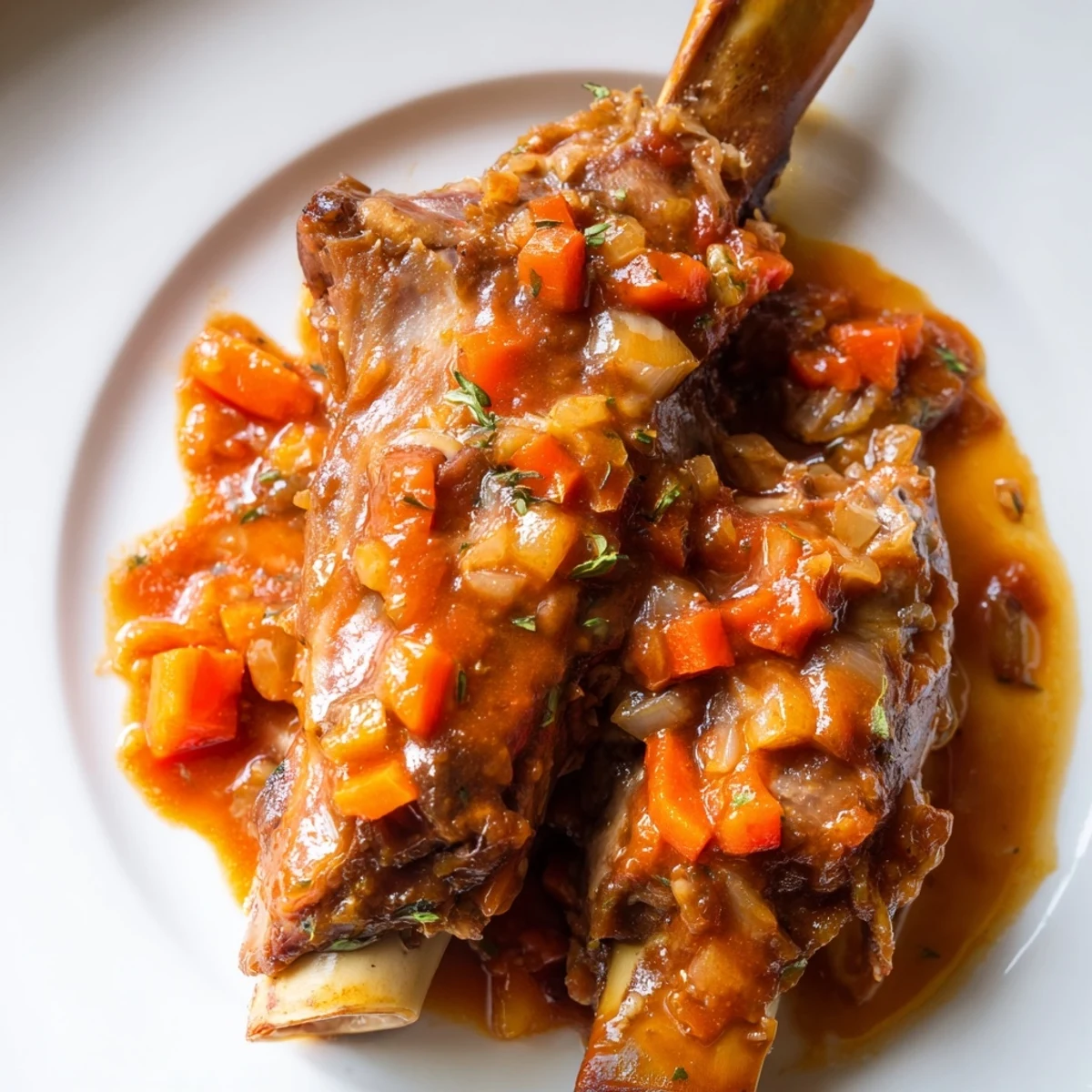
 Experience tender lamb shanks slowly braised in a savory tomato and herb sauce. The dish is gently cooked to develop deep, rich flavors, with herbs like rosemary and thyme enhancing the aromatic profile. The slow cooking process ensures the meat becomes succulent and falls off the bone, perfect for a comforting Mediterranean main course. Serve with creamy mashed potatoes or crusty bread to complement the bold sauce.
There's something about the smell of lamb braising in tomato and herbs that fills a kitchen with a kind of quiet promise. Years ago, a friend handed me her grandmother's recipe scrawled on an old index card, and I remember standing over a Dutch oven, watching the sauce deepen from bright red to a rich mahogany color over hours. That first time, I didn't quite believe three hours could transform something so humble into meat so tender it fell from the bone with the gentlest nudge. Now it's the dish I reach for when I want to feel like I'm cooking something truly special.
I made this for my sister's birthday dinner once, and she arrived to the door before I'd even set the table, drawn in by the aroma alone. There's a confidence that comes from knowing dinner is already half-done by the time your guests arrive, and watching everyone's faces light up when you bring that beautiful braised lamb to the table never gets old. That night, we ended up talking until nearly midnight, plates cleared, glasses empty, completely forgetting about dessert.
Ingredients
- Lamb shanks (4, about 350–400 g each): These are the workhorse of the dish, packed with collagen that breaks down into gelatin and turns the sauce glossy and luxurious. Trimming the excess fat helps keep the sauce from becoming greasy, but don't be too aggressive—some fat carries flavor.
- Onions, carrots, and celery (the holy trinity): They're not just a base; they dissolve into the sauce and create a natural sweetness that balances the acidity of the tomatoes. Finely chopping the onions helps them break down faster.
- Garlic (4 cloves, minced): Fresh garlic mellows beautifully during the long braise and adds a subtle depth that just whispers rather than shouts.
- Canned crushed tomatoes (400 ml): Canned tomatoes are actually better here than fresh—they're consistent and already concentrated in flavor, which is what you need for a deep sauce.
- Beef or lamb stock (250 ml): This adds body and umami; lamb stock is ideal if you can find it, but beef works beautifully too. Avoid anything too salty, since you'll reduce the liquid.
- Dry red wine (120 ml): A full-bodied wine like Côtes du Rhône or Cabernet works best. The acidity cuts through the richness, and the alcohol burns off leaving only smooth, rounded flavors.
- Tomato paste (2 tbsp): This concentrates the tomato flavor and adds a subtle bittersweet note that makes people ask what the secret ingredient is.
- Fresh herbs—rosemary, thyme, and bay leaves: Fresh herbs matter more here than in many dishes because they infuse the sauce directly. The rosemary becomes almost woody and mysterious, the thyme stays green and bright.
- Dried oregano (1 tsp): This adds a Mediterranean note that ties everything together without tasting herbal in an obvious way.
- Olive oil (2 tbsp): Use something you don't mind cooking with—good quality, but not your fancy finishing oil.
Instructions
- Heat your oven or slow cooker:
- Get your Dutch oven into a 160°C oven, or set your slow cooker to low. This gentle heat is the entire secret—it's what turns those shanks into something melt-in-your-mouth tender.
- Season the lamb generously:
- Rub salt and pepper all over each shank. Don't be shy; this is your only chance to season the meat itself, so be thorough.
- Sear the shanks until golden:
- Heat olive oil in your pot over medium-high heat until it shimmers, then lay the shanks in carefully—you'll hear a satisfying sizzle. Let them sit undisturbed for a couple of minutes on each side until they develop a deep golden crust. This takes about 8 minutes total and creates a savory depth that raw meat just can't provide. Remove them and set aside.
- Build the flavor base:
- In the same pot, add your chopped onions, carrots, and celery. The fond on the bottom—all those browned bits from the lamb—will stick to your vegetables, which is exactly what you want. Let them soften for 5–7 minutes, stirring occasionally, until they start to turn translucent at the edges. Add your minced garlic and let it sit for just a minute more, so the raw edge softens but it doesn't brown.
- Add tomato paste and deglaze:
- Stir in the tomato paste, moving it around the pot for about a minute so it caramelizes slightly and loses its raw edge. Pour in your red wine, and use a wooden spoon to scrape the bottom of the pot, loosening all those precious browned bits. You'll see the wine darken and deepen as it pulls everything up. Let it simmer for 2 minutes, just long enough for the alcohol to burn off.
- Build the braising liquid:
- Add your crushed tomatoes and stock, along with the rosemary sprigs, thyme sprigs, bay leaves, and oregano. Stir everything together—the mixture should smell incredible at this point, rich and herbaceous and deeply savory. Give it a good stir so nothing's stuck to the bottom.
- Return the lamb and settle it in:
- Nestle your seared shanks back into the pot, lying them on their sides so they're surrounded by sauce rather than sitting on top. The liquid should come about halfway up the sides of the meat. Bring everything to a gentle simmer on the stovetop, just so you see a few bubbles breaking the surface.
- Cover and braise low and slow:
- Cover the pot with its lid and transfer it to the oven, or pour everything into your slow cooker and set it to low. If using the oven, this takes 2.5–3 hours; if slow cooking, plan for 7–8 hours. The meat should be so tender it falls apart at a touch, but not so long that it turns to mush. Peek after 2 hours just to make sure the sauce is simmering gently, not boiling.
- Rest and finish the sauce:
- Remove the lamb shanks and tent them loosely with foil to keep them warm while you finish the sauce. Skim any excess fat from the top with a spoon—you want some richness, but not a greasy slick. Simmer the sauce uncovered on the stovetop for 10–15 minutes to reduce and thicken it. If you prefer a thinner sauce, skip this step. Taste and adjust the salt and pepper.
- Serve with pride:
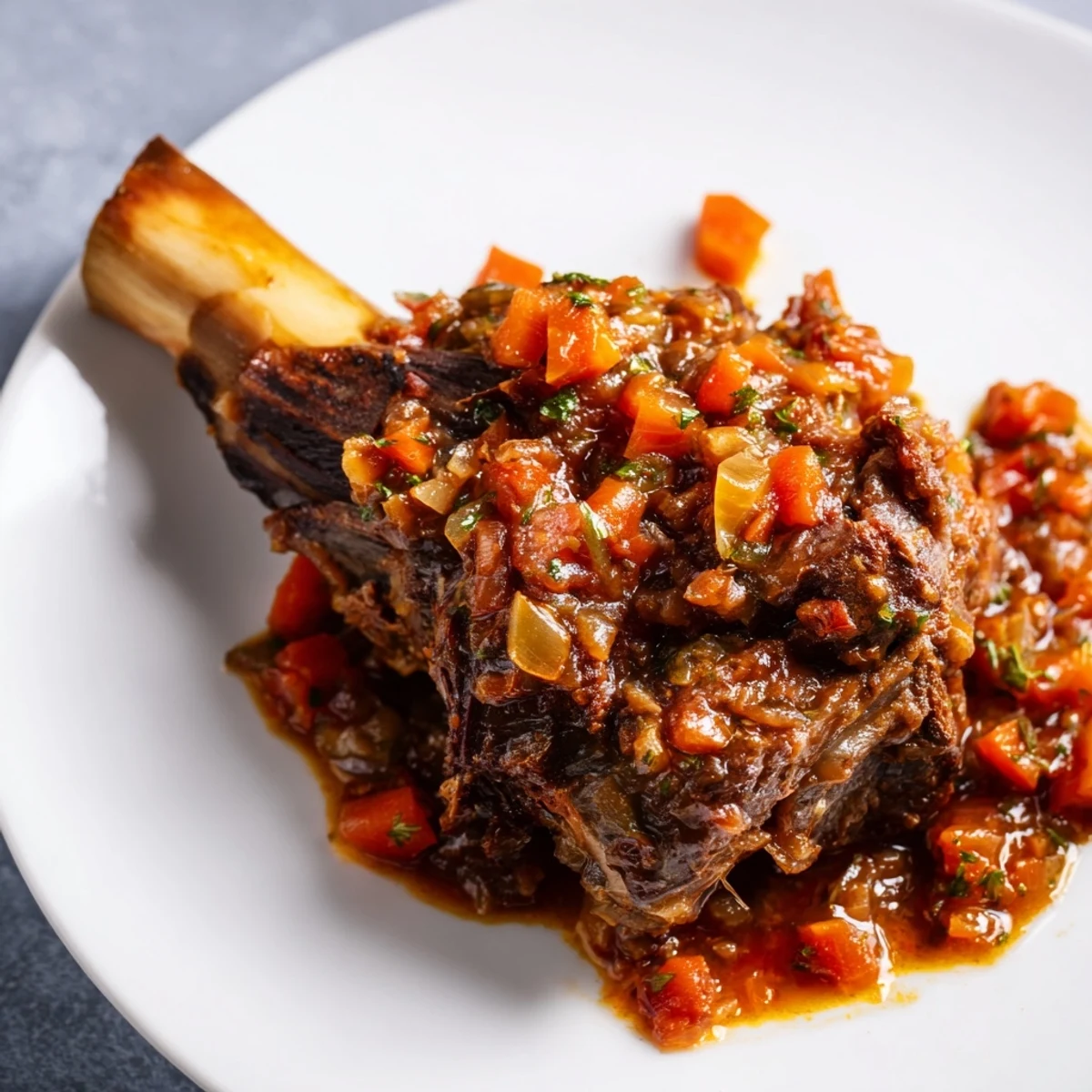
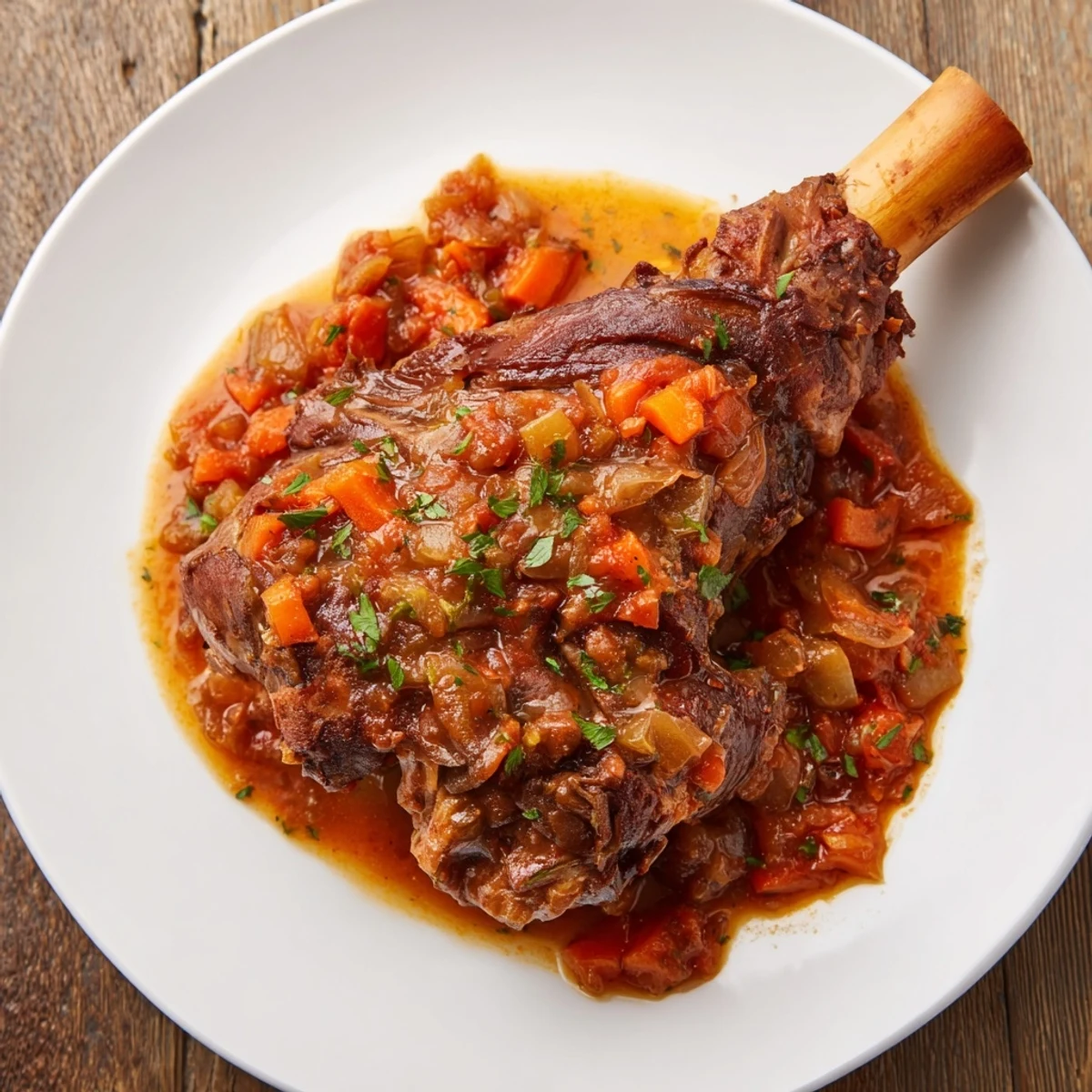
- Place a shank on each plate, spoon the generous amount of sauce over it, and finish with a small pinch of fresh herbs if you have them. The meat should be so tender that a fork slides through it easily, and the sauce should be glossy, rich, and deeply flavorful.
 Save to Pinterest
 My neighbor once asked me how I always have dinner ready when she arrives unannounced, and I realized it's because of dishes like this one. There's something grounding about knowing hours ahead of time that something wonderful is happening in your oven, that you're being a good host to yourself.
What Makes This Braise Special
Braising is one of those cooking methods that feels like magic once you understand it: you're using moisture and gentle heat to break down tough cuts until they become tender and luxurious. Lamb shanks are full of collagen, which converts to gelatin during a long, slow braise, creating a sauce that's velvety and rich without any cream. The long cooking also allows all those herbs to fully infuse the meat and sauce, so every bite tastes complex and developed, like something that took far more effort than it actually did. The tomato provides acidity and brightness that keeps the dish from feeling heavy, even though it's deeply satisfying.
Serving and Pairing
This dish is elegant enough for company but simple enough for a quiet night at home, and it pairs beautifully with almost any side that can soak up the sauce. Creamy mashed potatoes are the classic choice—they become almost luxurious when draped with this rich sauce. Polenta works wonderfully too, especially if you stir in a little Parmesan and butter, turning it into something velvety that catches every drop of the braise. Even crusty bread is perfect; I've been known to use it to wipe down my plate, and no one has ever judged me for it.
Variations and Substitutions
This recipe is forgiving and adaptable, which is part of why I love it so much. Beef shanks work beautifully if lamb is hard to find or too expensive, and they braise in roughly the same time with equally tender results. You can add a strip of orange zest for brightness, or a pinch of chili flakes if you like a whisper of heat. Some cooks add a handful of olives near the end, which adds a briny note that's quite delicious. The sauce can be strained and finished with a splash of cream if you want something richer, though I find it perfect as is.
- Beef shanks braise beautifully and become just as tender as lamb.
- A strip of orange zest or chili flakes add complexity without changing the core character of the dish.
- Don't be afraid to make this a day ahead—it reheats beautifully and often tastes even better the next day.
 Save to Pinterest
 There's a reason this dish has stayed in my rotation for so long: it's one of those meals that tastes like you've been cooking all day, when really you've just been patient and let time do the work. Make it once, and I promise it'll become a favorite.
Recipe FAQs
- → What cut of meat works best for this dish?
-
Lamb shanks are ideal due to their rich connective tissue, which breaks down during slow cooking to create tender, flavorful meat.
- → Can I use another cooking method besides the oven?
-
Yes, this dish can also be prepared in a slow cooker set to low for 7-8 hours to achieve similar tenderness.
- → What herbs enhance the flavor in this dish?
-
Fresh rosemary, thyme, and bay leaves add depth and Mediterranean aroma to the braising sauce.
- → How should I thicken the sauce after cooking?
-
Simmer the sauce uncovered on the stovetop for 10-15 minutes to reduce excess liquid and concentrate flavors.
- → What side dishes complement this preparation?
-
Creamy mashed potatoes, polenta, or crusty bread work well to soak up the flavorful tomato and herb sauce.