
 Save to Pinterest
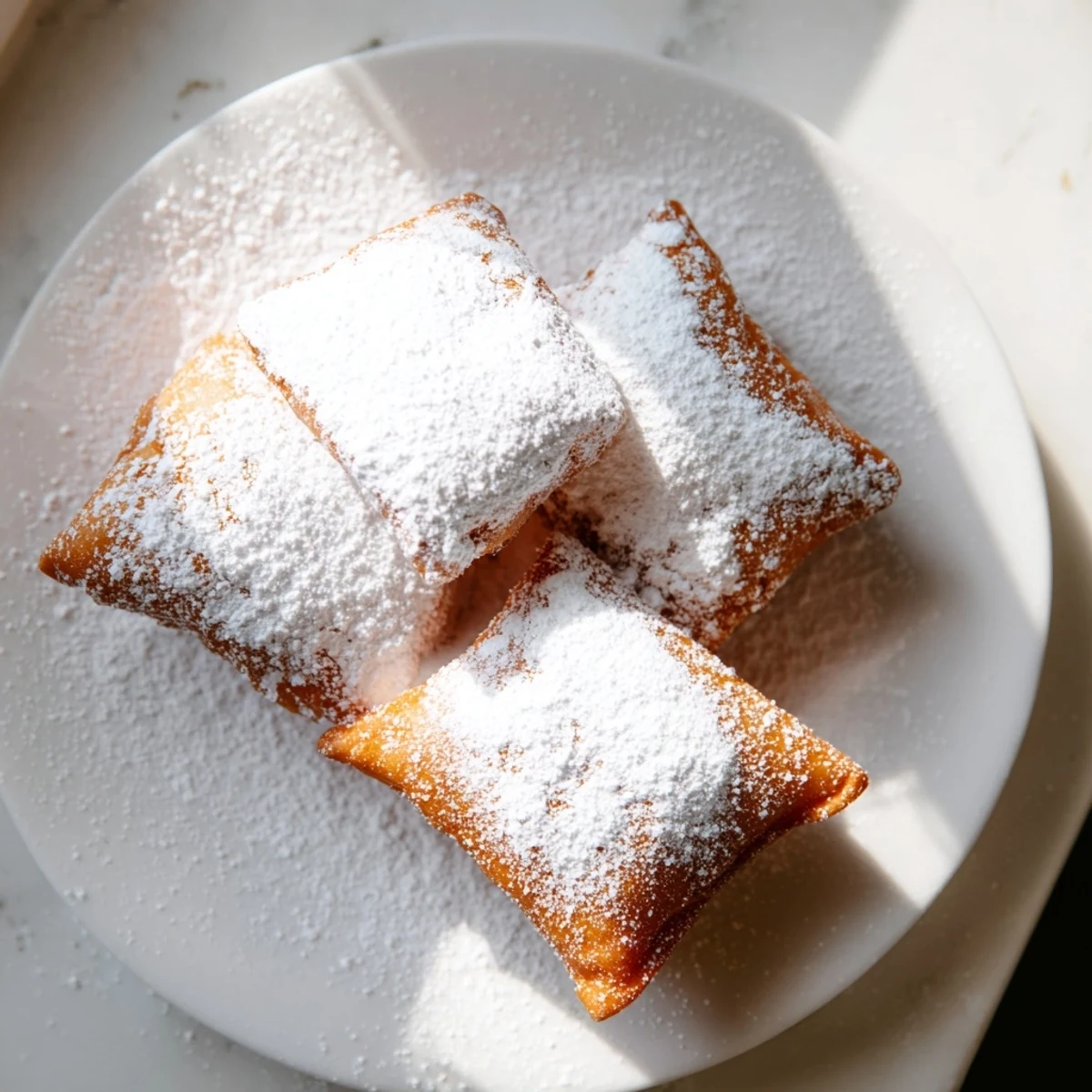
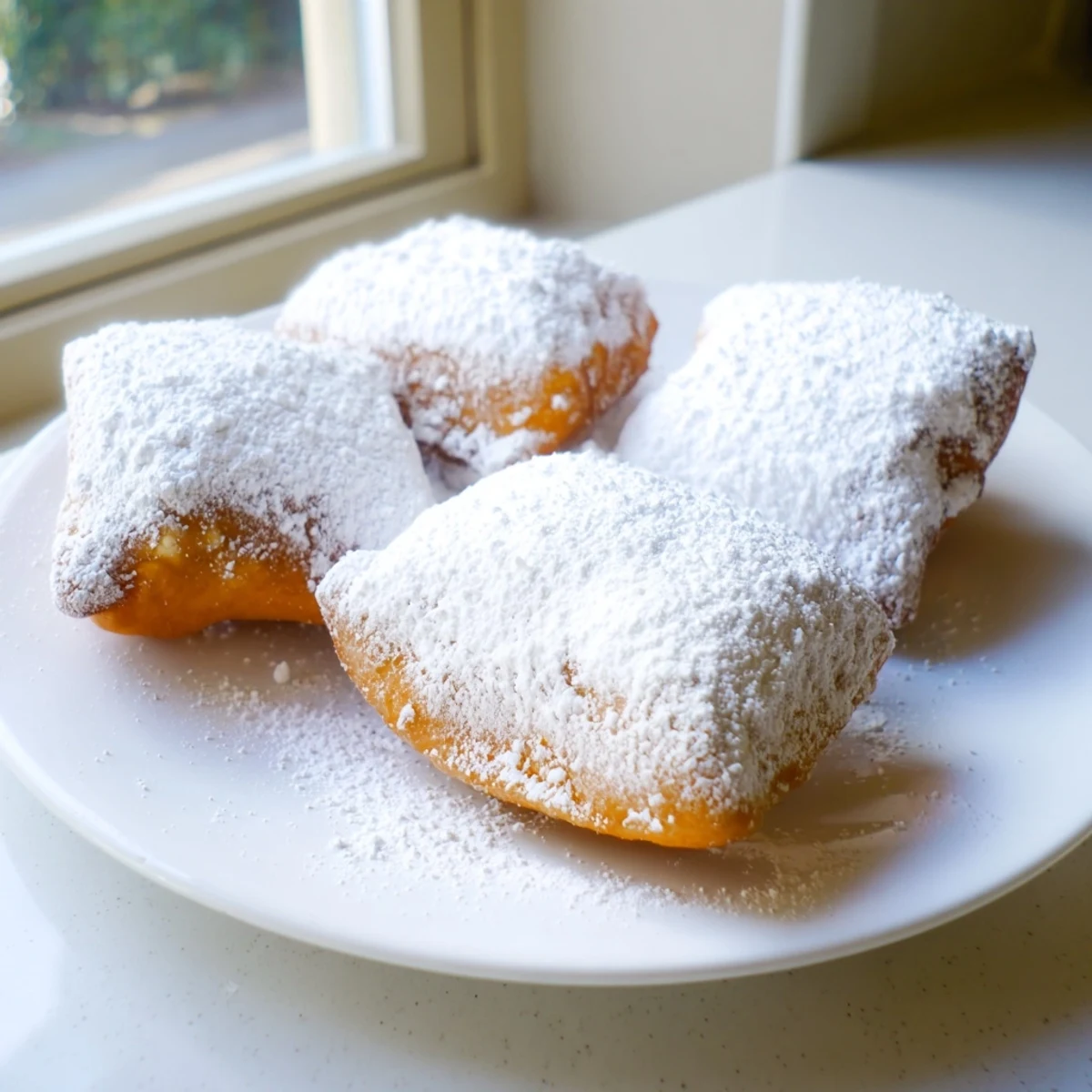
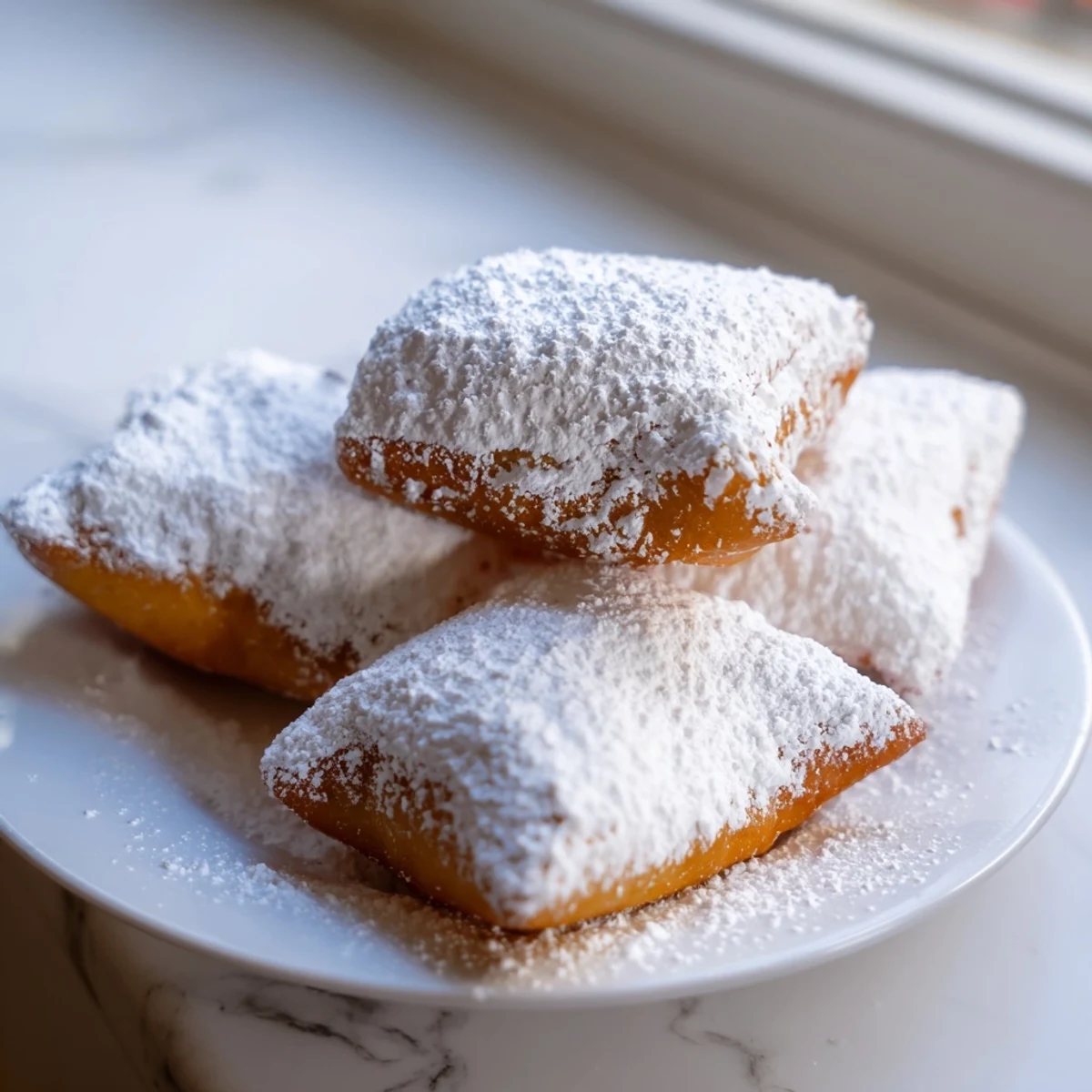
 These New Orleans style beignets feature a light and pillowy dough, deep-fried to a perfect golden brown. The dough is enriched with warm milk, egg, butter, and vanilla, then left to rise for fluffy texture. Once fried, each square-shaped fritter is generously dusted with powdered sugar, offering a sweet and tender bite. Ideal when served fresh and warm, these beignets capture the essence of the French Quarter with every mouthful.
Preparation includes mixing a yeast-activated dough, allowing it to rise, then cutting it into squares before frying. A deep fryer or pot heated to 350°F ensures crisp, airy results. Consider adding warming spices like nutmeg or cinnamon for an extra layer of flavor. Best enjoyed alongside coffee or café au lait for an authentic experience.
The first time I walked through the French Quarter at dawn, the air already hung heavy with the scent of frying dough and drifting powdered sugar. I'd been up all night listening to jazz spill out of closed club doors, and when Café du Monde's green umbrellas appeared through the morning mist, I understood why people line up in weather that feels like warm soup. Those beignets changed something in me—food isn't just sustenance when it arrives like magic, when you can taste history in every bite of crunch and sweet.
My roommate caught me standing over the cooling rack one snowy afternoon, just watching the steam rise off a batch I'd made from memory. She thought I'd lost it until she tried one warm, sugar coating her upper lip like evidence of some delicious crime. Now whenever winter feels endless, we make beignets and pretend we're somewhere the humidity hits you like a hug.
Ingredients
- All-purpose flour: The backbone that gives these their structure without weighing them down
- Warm whole milk: Temperature matters here—too hot and you'll kill the yeast, too cool and it won't wake up properly
- Granulated sugar: Feeds the yeast and adds just enough sweetness to the dough itself
- Active dry yeast: One packet is perfect, but give it time to foam before moving forward
- Large egg: Adds richness and helps create that signature tender crumb
- Unsalted butter: Melt it slightly so it incorporates evenly into the dough
- Salt: Just a half teaspoon balances all that sweetness
- Vanilla extract: Deepens the flavor so it's not just sugar and flour
- Vegetable oil: You need enough depth for the beignets to float freely while frying
- Powdered sugar: Apply generously while still warm—the heat helps it cling perfectly
Instructions
- Wake up the yeast:
- Combine the warm milk with sugar and yeast in a small bowl, watching for that foam that tells you it's alive and ready to work
- Mix the dough:
- Whisk flour and salt in a large bowl, then add the yeast mixture along with egg, melted butter, and vanilla until a sticky dough forms
- Knead until smooth:
- Turn onto a floured surface and knead for about five minutes until the dough transforms from shaggy to elastic and responsive
- Let it rise:
- Place in a greased bowl, cover, and find the warmest corner of your kitchen for at least an hour until it's doubled in size
- Roll and cut:
- Turn onto floured surface, roll to half-inch thickness, and cut into squares with a sharp knife or pizza cutter
- Heat the oil:
- Get your oil to 350°F—a thermometer is your friend here, but a pinch of dough bubbling up immediately works too
- Fry to golden:
- Cook three or four at a time for two to three minutes per side until they're puffed and deeply golden
- Sugar immediately:
- Drain briefly on paper towels, then dust with powdered sugar while still warm
 Save to Pinterest
 Last Mardi Gras, I made three batches back-to-back while friends streamed in and out of my tiny apartment. By midnight, powdered sugar covered everything—my counters, my dog's nose, the shoulders of my favorite sweater. Nobody complained.
Mastering the Rise
I've learned that yeast is particular about its environment. On cold days, I'll preheat my oven for exactly one minute, then turn it off and let the dough rise inside—the residual warmth creates the perfect conditions. In summer, the back of a sunny counter does the trick just as well.
Frying Without Fear
The first time I deep-fried anything, I hovered with a fire extinguisher like it was going to attack. Now I understand that hot oil respects confidence and preparation. Keep your thermometer steady, don't crowd the pot, and trust that the bubbles will tell you when everything's working as it should.
Serving Suggestions
There's something about the combination of hot beignets and strong coffee that feels practically sacred in our house. We've started keeping a bag of powdered sugar on hand specifically for weekend mornings when we need to slow down. The ritual has become its own reward.
- Try adding a pinch of nutmeg to the dough for subtle warmth
- A café au lait alongside makes the experience complete
- Reheat leftovers briefly in the oven rather than the microwave
 Save to Pinterest
 Some recipes are just recipes, but beignets are moments. Share them warm, share them often.
Recipe FAQs
- → What type of flour is best for these beignets?
-
All-purpose flour works perfectly to create a soft and elastic dough that fries up light and airy.
- → How long should the dough rise before frying?
-
Allow the dough to rise in a warm place for about 1 to 1.5 hours, until it doubles in size for optimal fluffiness.
- → What's the ideal oil temperature for frying?
-
Heat the oil to 350°F (175°C) to ensure the beignets cook evenly and develop a golden, crisp exterior.
- → Can I add any spices to the dough?
-
Yes, a pinch of nutmeg or cinnamon enhances the flavor and adds a warm, aromatic note to the dough.
- → How should I serve these beignets for best flavor?
-
Serve fresh and warm, generously dusted with powdered sugar. Pairing them with café au lait brings authentic New Orleans flair.