
 Save to Pinterest
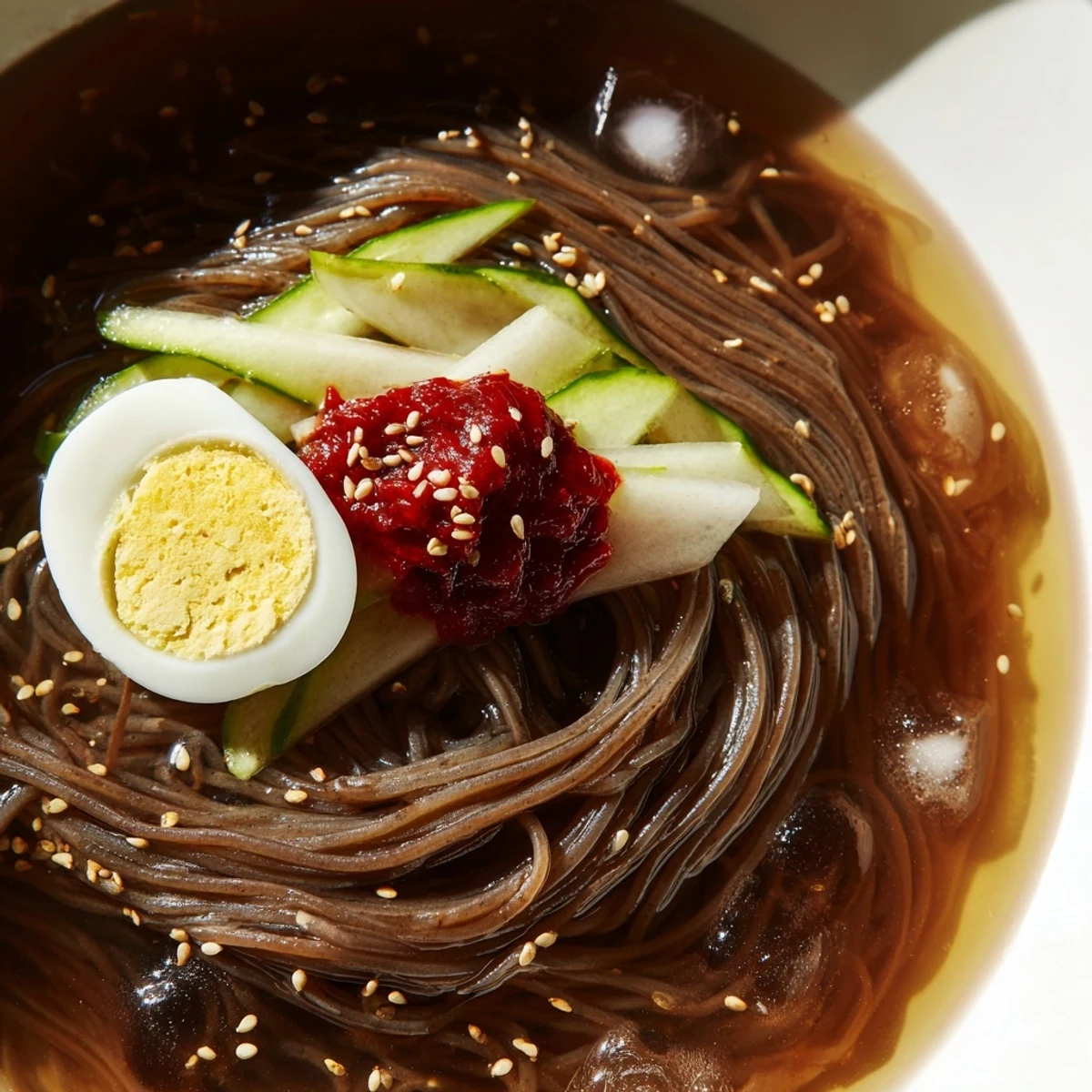
 Korean naengmyeon delivers a refreshing experience with chewy buckwheat noodles bathed in tangy, vinegary broth. The dish balances cold temperatures with savory depth from beef broth, while toppings like thinly sliced beef, crisp Asian pear, and cucumber provide contrasting textures. Serve with ice cubes to maintain the chilly temperature traditional to this summer favorite.
The first time I encountered naengmyeon was at a bustling Korean restaurant in the middle of July. My friend laughed watching me struggle with the chewy buckwheat noodles using child scissors while sweat beaded on my forehead. The icy broth hit like an unexpected embrace in sweltering heat, tangy and bracing. That bowl taught me that temperature can be its own seasoning.
Last summer, my sister came over absolutely dripping from a subway platform meltdown. I had broth chilling in the fridge from the night before. She refused to move from the kitchen table until every drop was gone, calling it an edible air conditioner.
Ingredients
- Beef broth: Homemade gives you control over salt intensity, but low sodium works beautifully as a base
- Rice vinegar: This is the backbone of the broth, providing that signature tang without harshness
- Sugar: Balances the vinegar and salt, creating a perfectly rounded flavor profile
- Sesame oil: A small amount adds depth and nutty warmth to the chilled broth
- Naengmyeon noodles: These buckwheat noodles have an irresistible chew that holds up beautifully in cold broth
- Asian pear: Adds natural sweetness and incredible crisp texture to every bite
- Ice cubes: Non-negotiable for keeping the broth teeth-chatteringly cold
Instructions
- Build the icy foundation:
- Whisk together your beef broth, cold water, rice vinegar, sugar, soy sauce, sesame oil, and salt until everything dissolves completely. Tuck it in the fridge and forget about it for at least an hour, the colder the better.
- Prep your toppings:
- Boil your eggs for exactly 10 minutes, then shock them in cold water for easy peeling. Slice your beef brisket paper thin, along with your cucumber and Asian pear. This prep work makes assembly effortless later.
- Cook and chill the noodles:
- Boil your noodles according to package directions, usually just 3-4 minutes. Drain and rinse under aggressively cold water until the noodles are completely cool and the starch washes away, giving them that signature springy texture.
- Bring it all together:
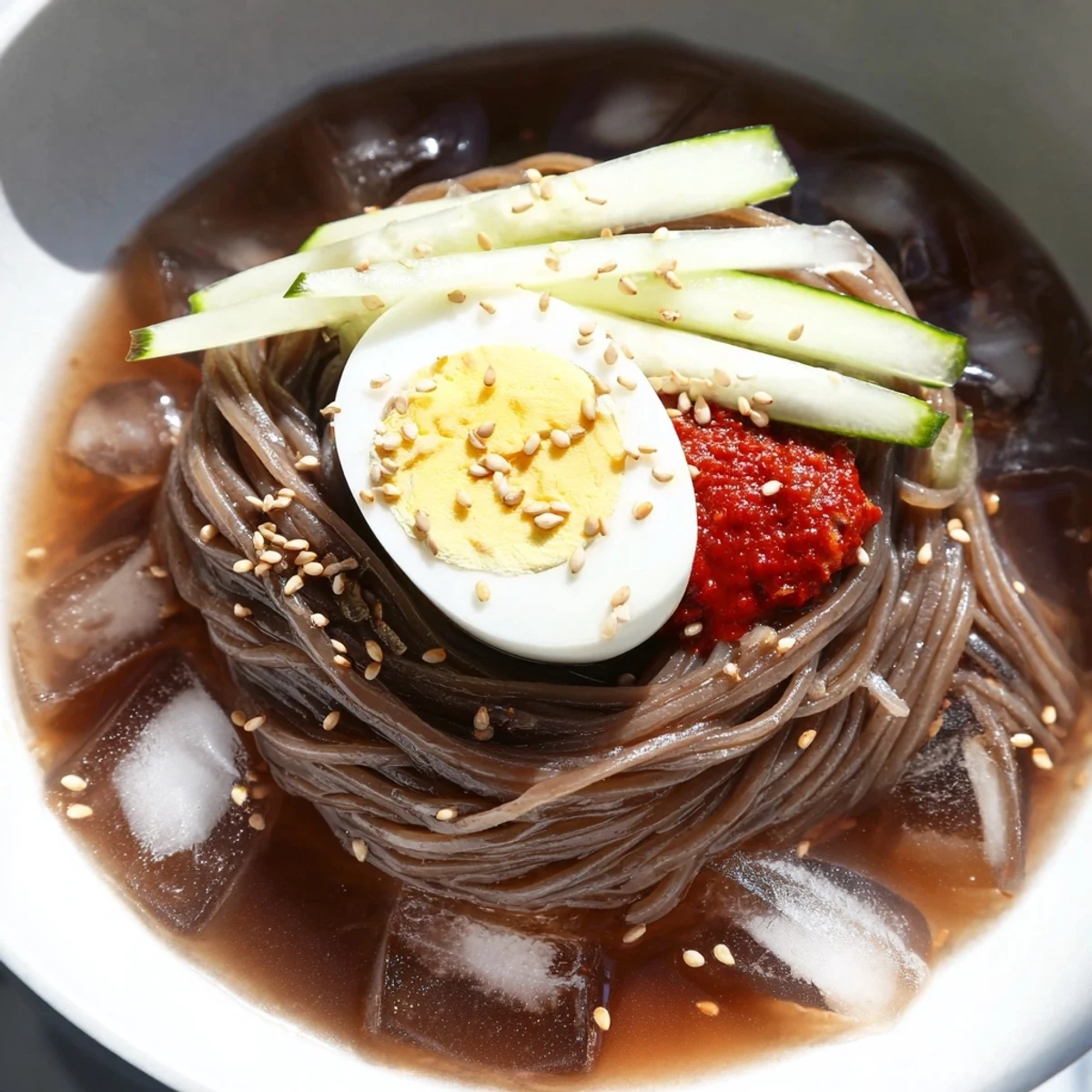
- Divide those cold noodles among four bowls. Pour your chilled broth over the top, then arrange your toppings with care, letting the egg, pear, beef, and cucumber create a beautiful landscape. Drop in those ice cubes and watch the broth shimmer.
- Finish with flair:
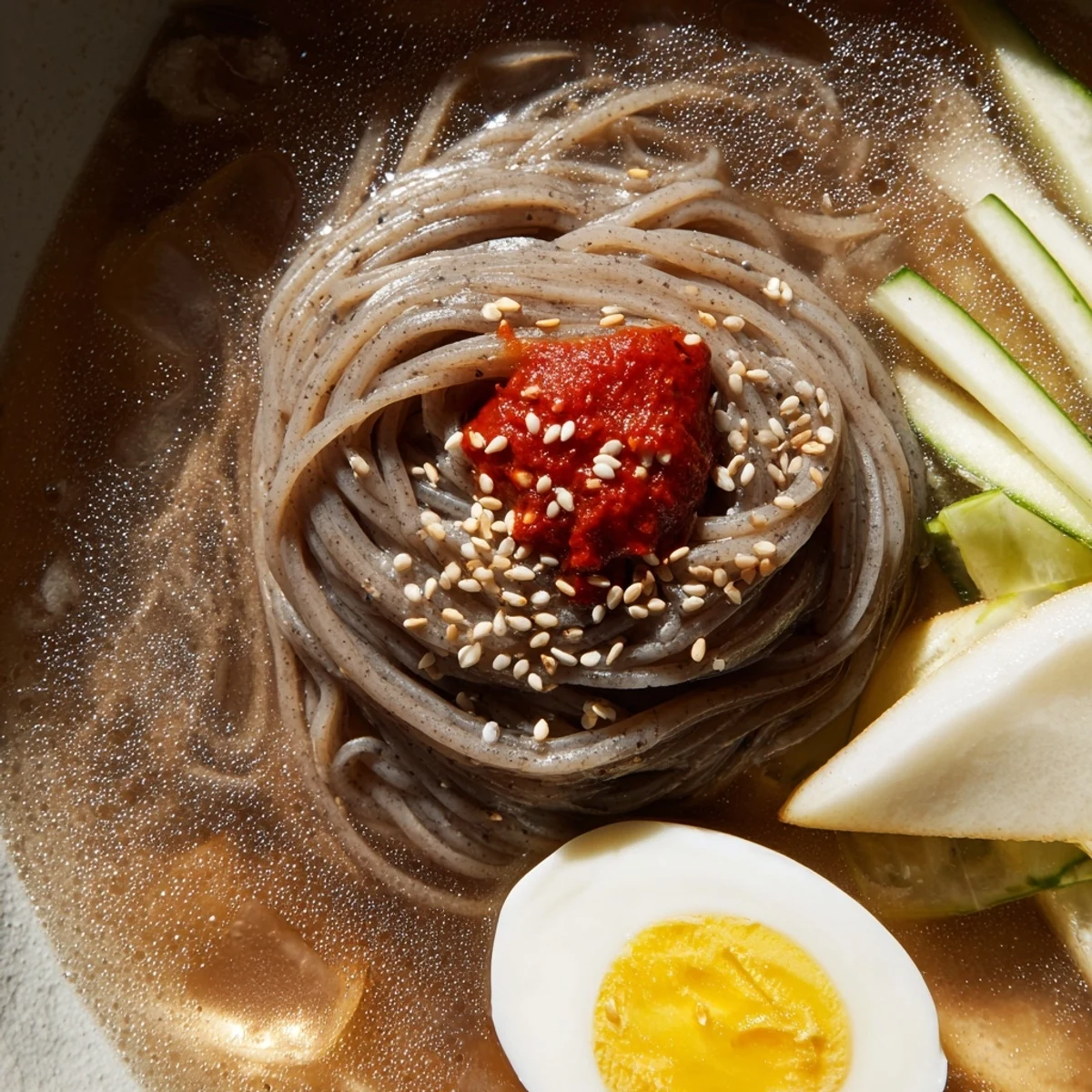
- Sprinkle with toasted sesame seeds and add a small dollop of gochujang if you like things spicy. Serve immediately before the ice melts.
 Save to Pinterest
 My grandmother always kept scissors at the table for naengmyeon, insisting that long noodles were a choking hazard in cold broth. Now every time I hear that tiny snip sound, I am transported back to her kitchen, steam rising from something else entirely while we ate ice soup.
Perfecting the Broth Balance
The ratio of vinegar to sugar is personal and worth tweaking to your taste. I tend to add an extra splash of vinegar because the sharpness wakes up the palate. If you are serving people who prefer milder flavors, reduce the vinegar and let the natural sweetness of the pear shine through.
Getting the Noodle Texture Right
Overcooking naengmyeon noodles is tragic because they go from perfect to mush in seconds. Set a timer and trust it. The rinse under cold water stops the cooking immediately and washes away excess starch, which is the secret to that distinctive chewy bite that makes these noodles so addictive.
Serving Like a Pro
Freeze your serving bowls for 15 minutes before plating. This little trick keeps the broth colder longer. Place scissors on the table and let everyone snip their own noodles, turning the meal into an interactive experience.
- Put vinegar and mustard on the table so people can customize their broth
- Korean mustard adds a completely different dimension of heat than gochujang
- Eat quickly, because nothing is sadder than warm naengmyeon
 Save to Pinterest
 Cold noodles might seem strange at first, but one steamy July afternoon will convince you completely. There is nothing quite like ice cold broth sliding down your throat when the world outside feels like an oven.
Recipe FAQs
- → What makes naengmyeon noodles unique?
-
Naengmyeon noodles are made primarily from buckwheat and sweet potato starch, creating a distinctly chewy and springy texture that holds up beautifully in cold broth. The noodles are thinner than typical pasta and require thorough rinsing after cooking to remove excess starch.
- → Can I make this dish ahead of time?
-
Yes! The broth actually benefits from being prepared in advance and refrigerated overnight, allowing flavors to meld. Prepare toppings separately and cook noodles fresh just before serving for the best texture.
- → What can I substitute for naengmyeon noodles?
-
Soba noodles made from buckwheat are the closest substitute, though they're slightly less chewy. Alternatively, thin somen noodles work well. Avoid regular pasta or rice noodles as they don't provide the authentic texture.
- → Is it necessary to serve with ice cubes?
-
While not strictly required, ice cubes are traditional and help maintain the characteristic cold temperature throughout the meal. The broth should be thoroughly chilled before serving regardless.
- → How spicy is this dish?
-
The base version is mild with tangy, savory flavors. The optional gochujang adds moderate heat. Adjust spice levels to preference by adding more chili paste or serving with mustard on the side.
- → Can I use different proteins?
-
Yes! While beef brisket is traditional, you can use cooked chicken, pork, or make it vegetarian with additional vegetables and mushrooms. The broth flavor profile should remain tangy and light regardless of protein choice.